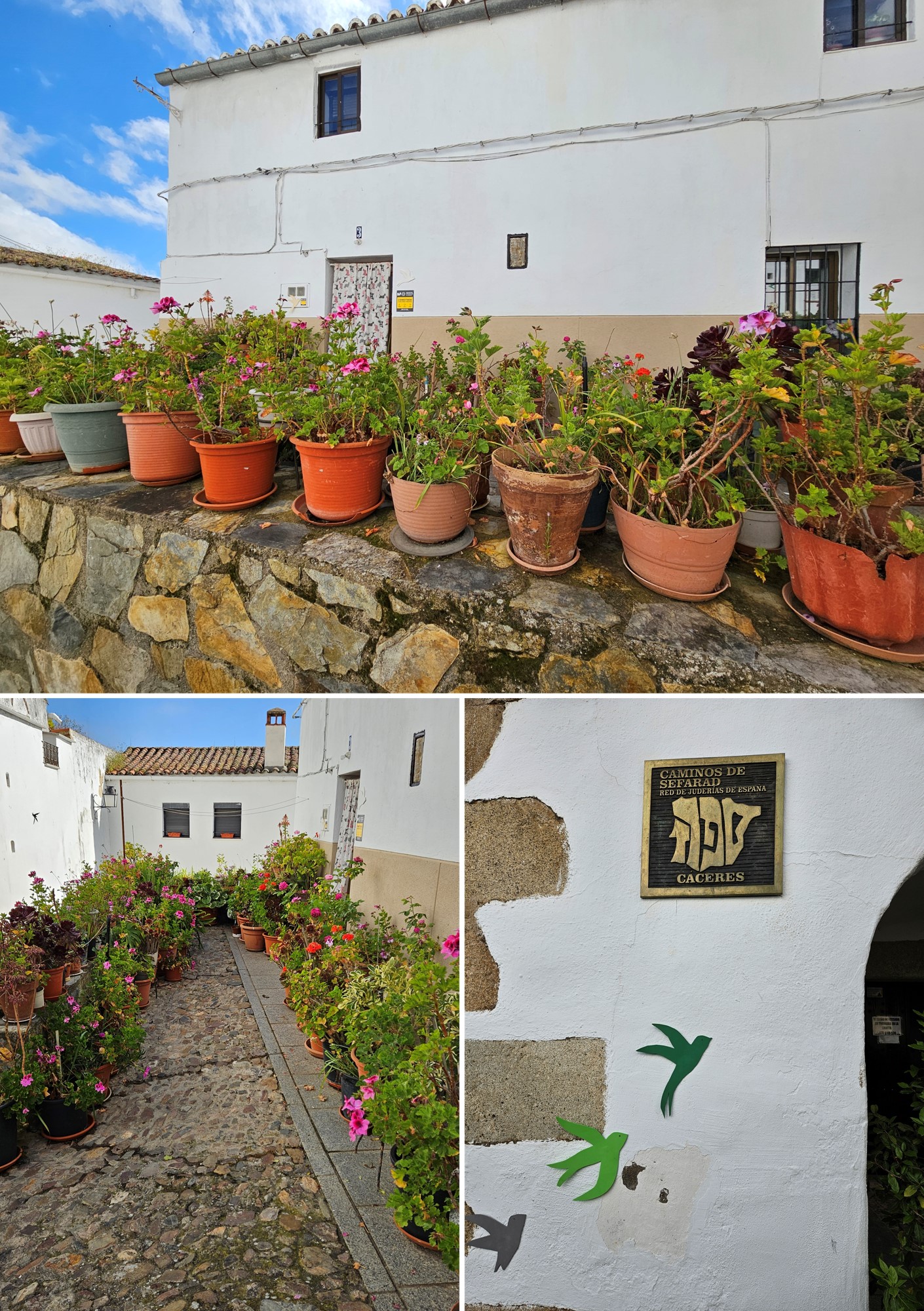
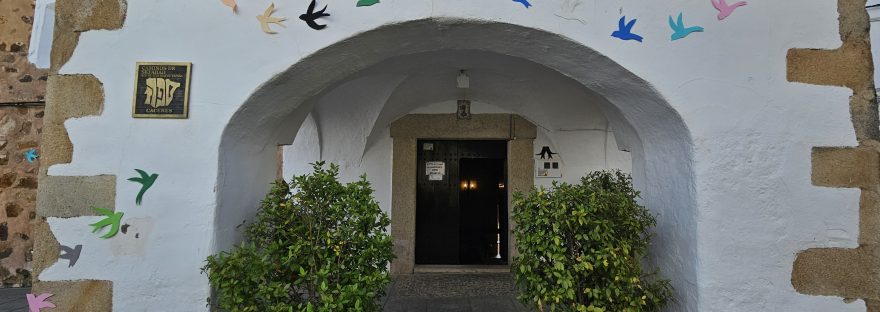
Built in the 15th century as an initiative of the Golfín family, the Hermitage of San Antonio stands on the site once occupied by the synagogue of the Old Jewish Quarter of Cáceres, also known as the Quebrada Ward. Historical evidence supporting this includes an ecclesiastical license granted on September 22, 1470, by the Bishop of Coria, Íñigo Manrique, authorizing the conversion of the former dwelling into a chapel dedicated to Saint Anthony of Padua.
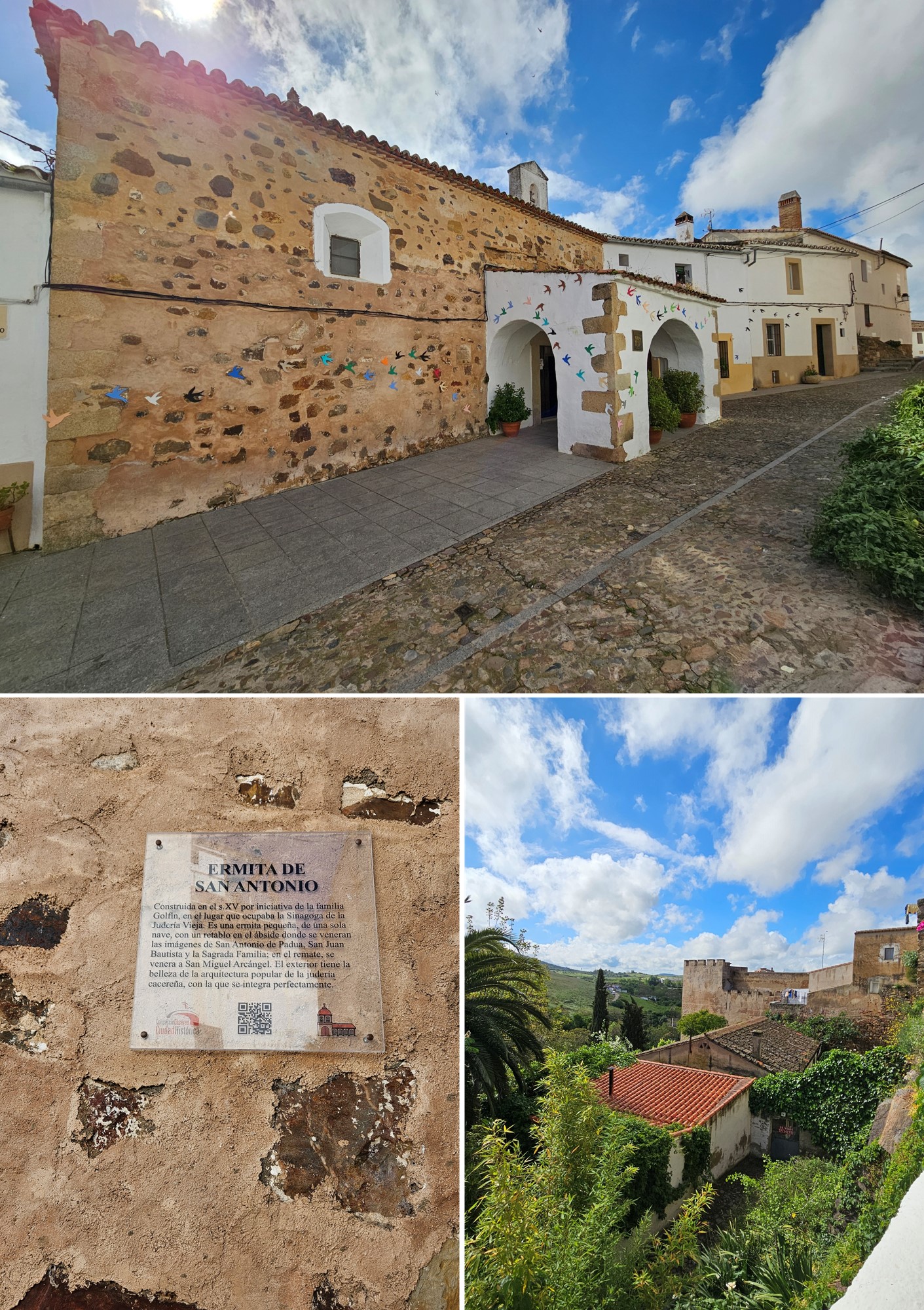
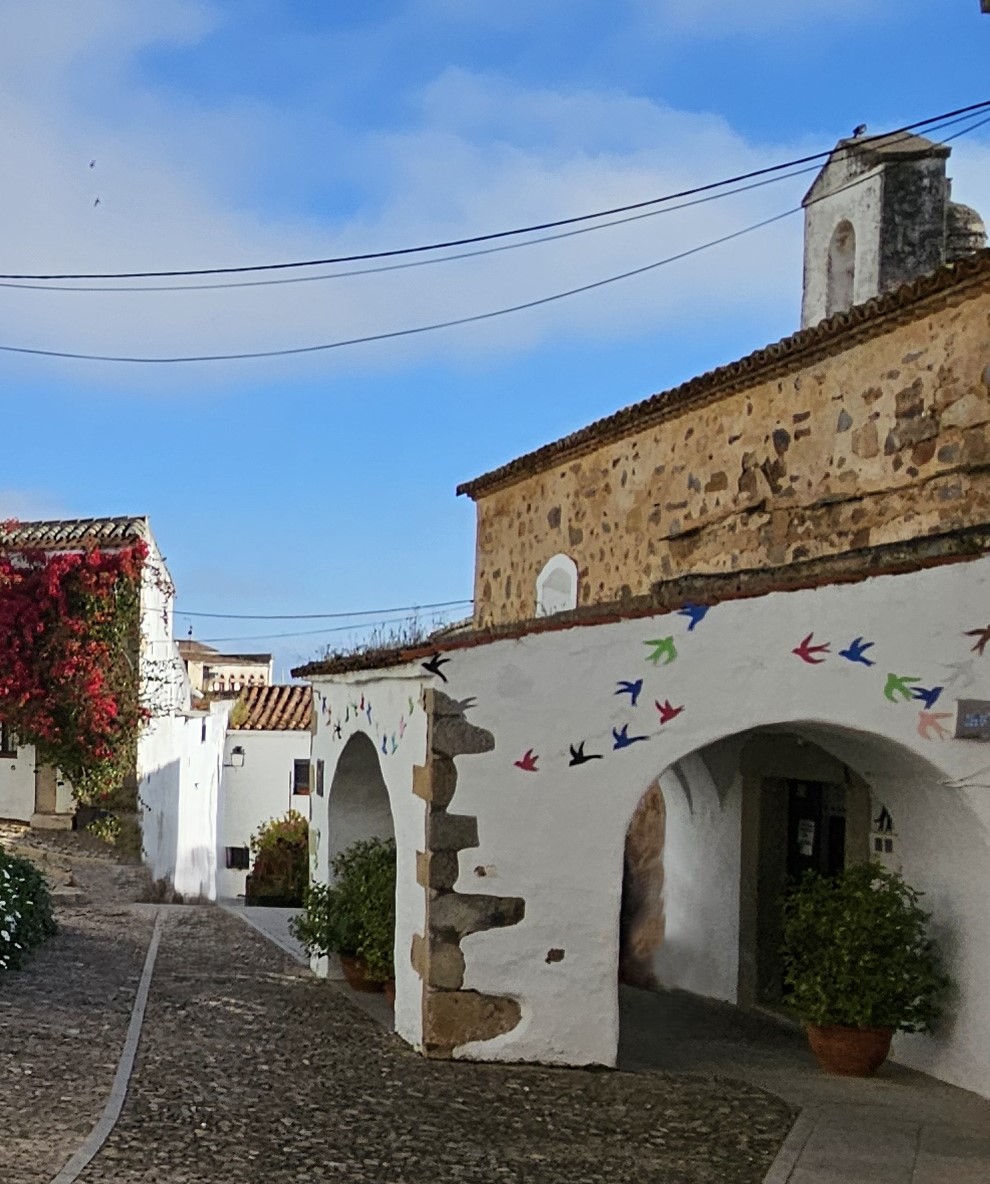
The exterior of the Hermitage of San Antonio reflects the charm of the traditional architecture of the Jewish Quarter of Cáceres. It is located next to the city wall in the historic center—designated a World Heritage Site—with which it blends harmoniously. Its whitewashed masonry and granite walls stand out, along with a front portico featuring three arches (one central and two lateral) supported by pilasters that highlight its traditional character.
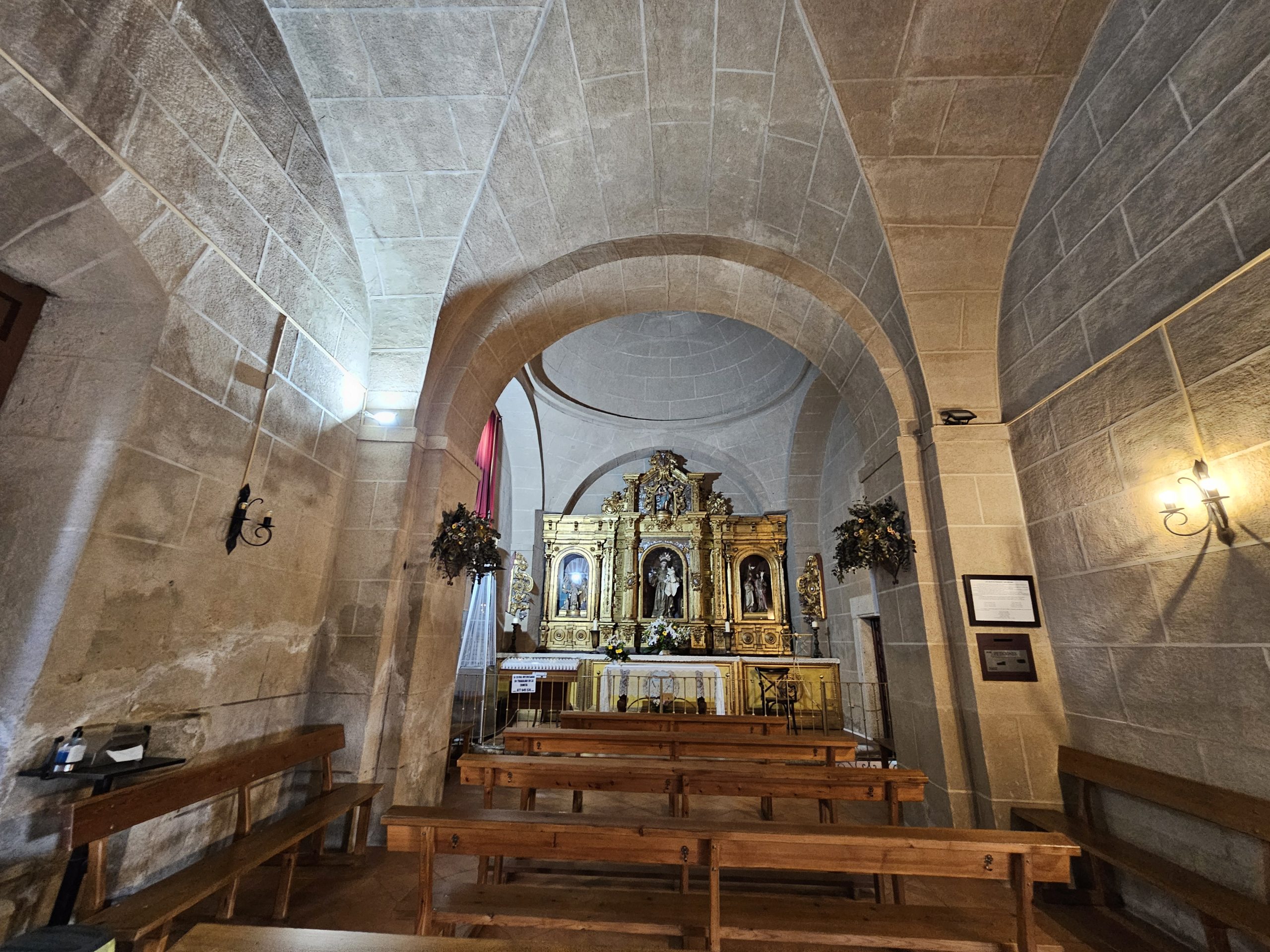
This is a small hermitage with a simple floor plan: a single rectangular nave covered by a barrel or groin vault, decorated with lunettes. In the apse, a rococo-style altarpiece stands out, richly decorated with gold leaf and exuberant ornamentation characteristic of its period. This altarpiece features images of Saint Anthony of Padua, Saint John the Baptist, and the Holy Family, topped with a figure of Saint Michael the Archangel. It was crafted in 1767 by the Cáceres carver José González.
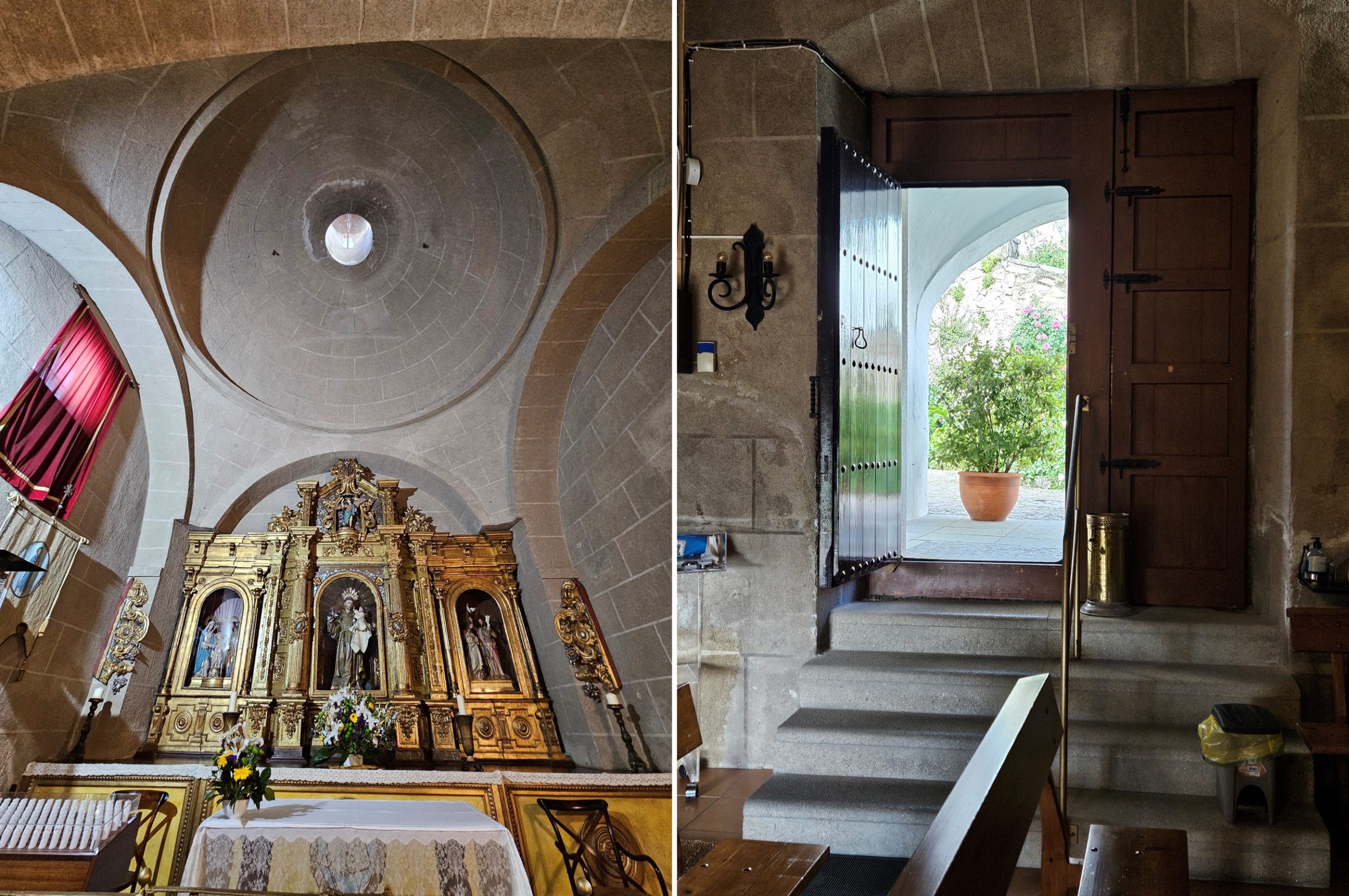
Between 1661 and 1666, major renovations were carried out, including the removal of the wooden roof, the construction of a dome over the altar, and the vaulting of the nave. In 1975, the exterior of the building underwent restoration. In addition, in the early 21st century, the hermit’s house attached to the chapel was remodeled and transformed into a small museum by a workshop school of the Popular University of Cáceres.
As for devotion, worship, and traditions, records show that by the 16th century the Hermitage of San Antonio was already part of local religious life as one of the twenty-four hermitages in the town. Shortly after its foundation, a confraternity dedicated to Saint Anthony was also established.
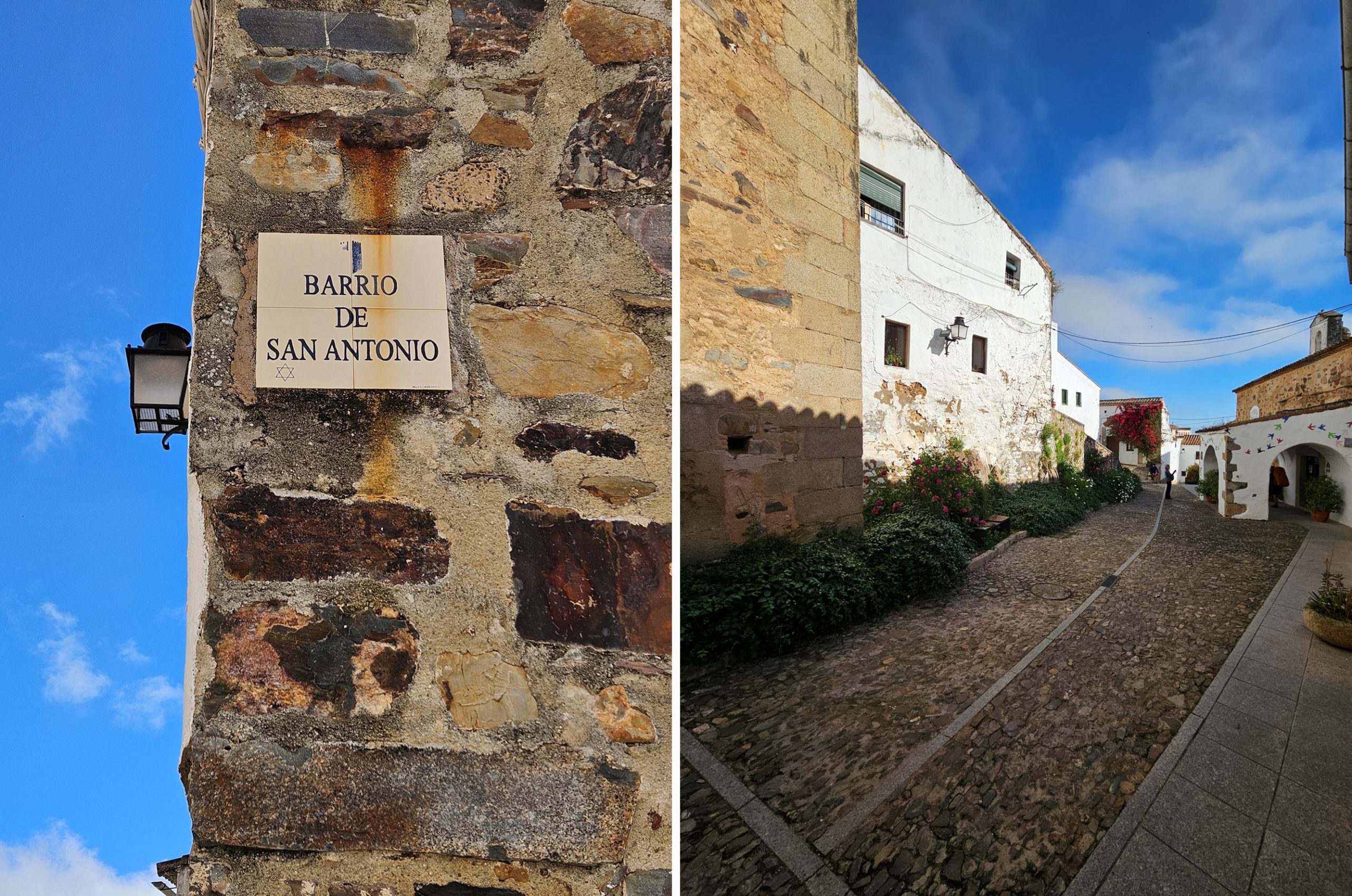
One of the most deeply rooted traditions at the Hermitage of San Antonio is the celebration on June 13, the feast day of Saint Anthony of Padua. On this day, a solemn Mass is held in the morning, and in the afternoon the image of the saint is carried in procession from the hermitage to the Church of San Mateo, passing through the streets of the Jewish Quarter. The procession ends with the popular “besacordón” (cord-kissing ritual) and the singing of Los Pajaritos. Devotion to Saint Anthony remains alive thanks to the tireless efforts of local families and associations, who organize the novena, the feast, and various charitable activities such as the distribution of alms for the benefit of the most vulnerable residents of Cáceres.