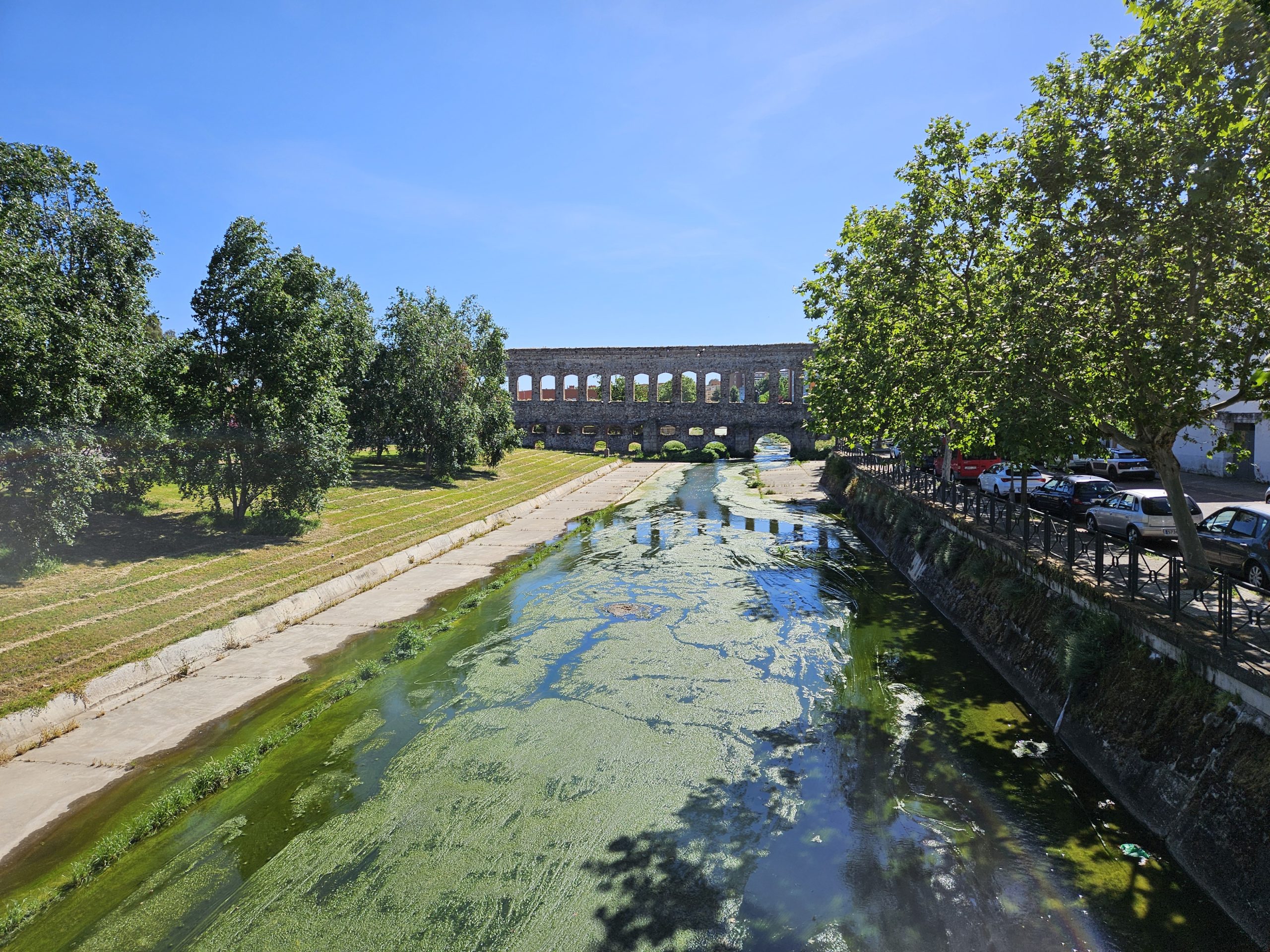
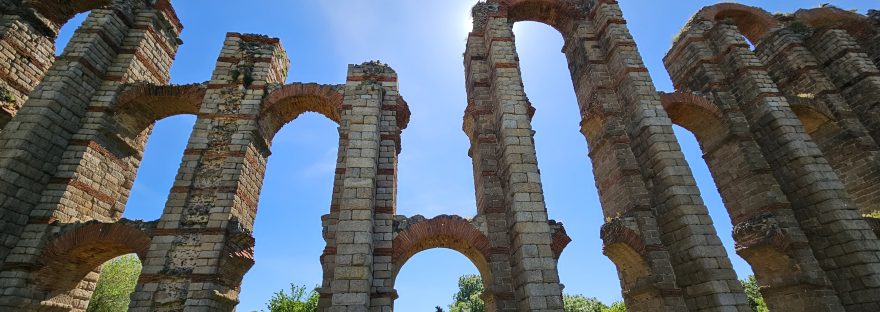
The Roman aqueducts of Mérida represent an important example of Roman engineering for supplying water to the city of Augusta Emérita (Mérida). Among them, the Aqueduct of Miracles stands out, famous for its arched span over the Albarregas Stream, and the Aqueduct of San Lázaro, also known as Rabo de Buey, which is longer and has remains from different construction periods. Both are part of the Archaeological Complex of Mérida, declared a World Heritage Site by UNESCO in 1993.
The Aqueduct of Miracles was built in the 1st century AD to transport water from the Proserpina reservoir to the city of Augusta Emérita. Currently, approximately 800 meters long, 25 meters (82 feet) high, and a total of 73 pillars remain. The arches are built of brick, except for the arch that spans the riverbed, which is made of granite.
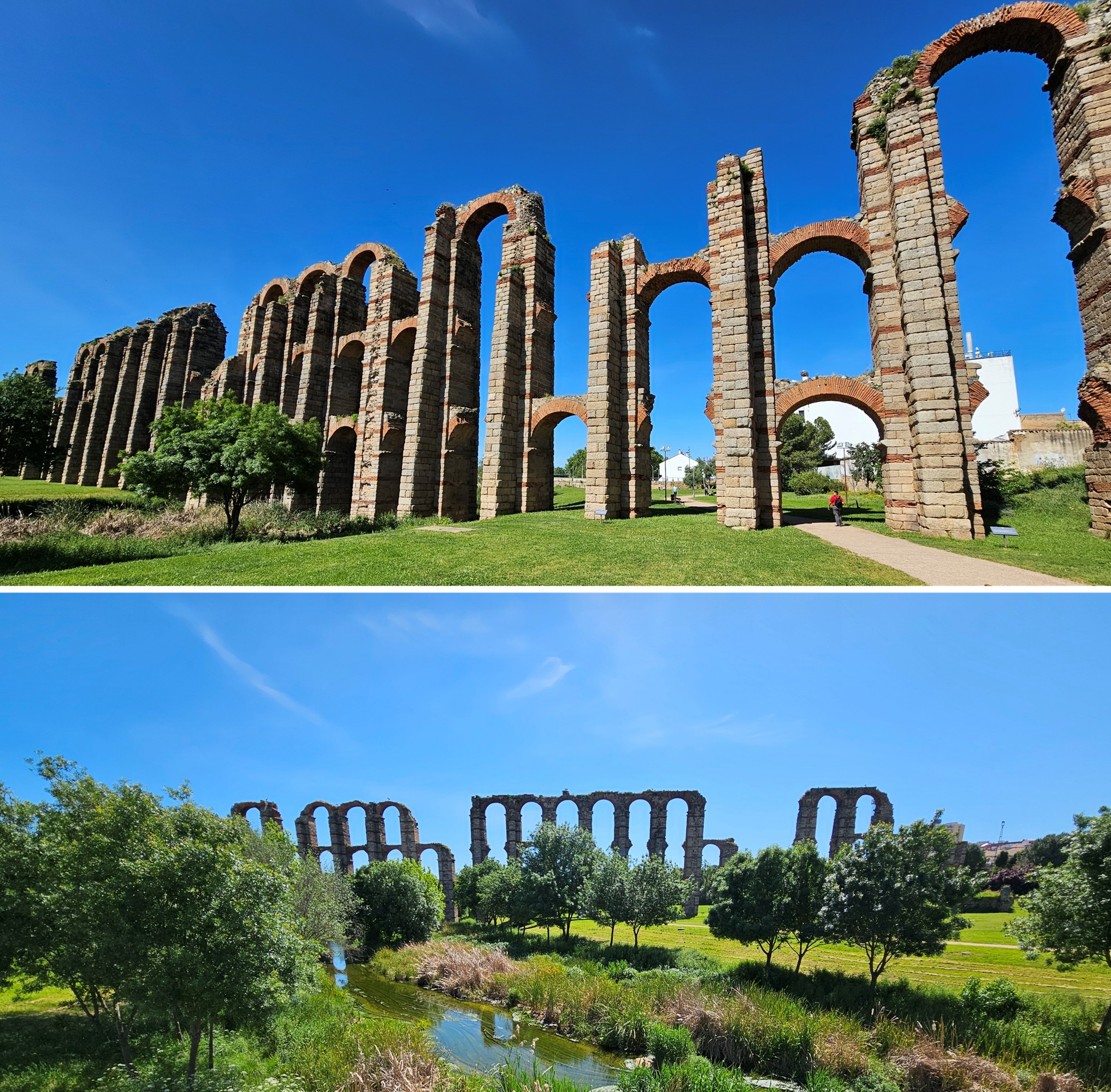
Water was drawn from the Roman reservoir of Proserpina through an underground gallery that extended several meters below ground. Thanks to ingenious planning, the water circulated through the gallery by gravity, with the aqueduct’s design carefully adjusted to take advantage of the slopes and unevenness of the terrain. The Los Milagros Aqueduct crosses the valley of the Albarregas Stream, and its name reflects the admiration its preservation has garnered over the centuries. We can attest that, when contemplating it, the first impression that comes to mind is precisely that: it is a miracle that, despite the passage of time, part of its structure still remains standing.
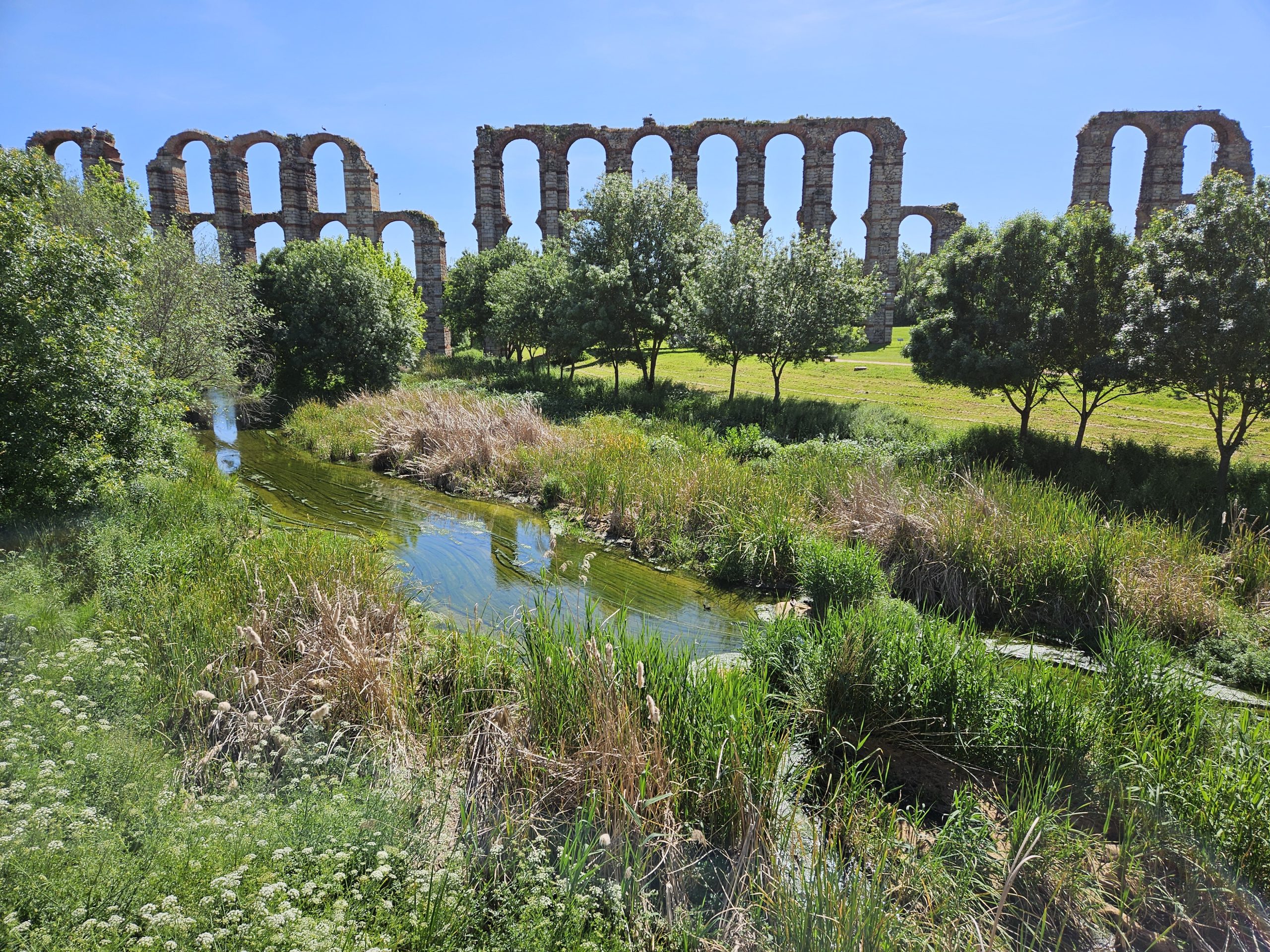
Right where the Albarregas stream flows, a beautiful granite ashlar arch stands out in the aqueduct, recognized as the most emblematic archway. To purify the water, the so-called «limarium pool» was used, which also served as a fountain.
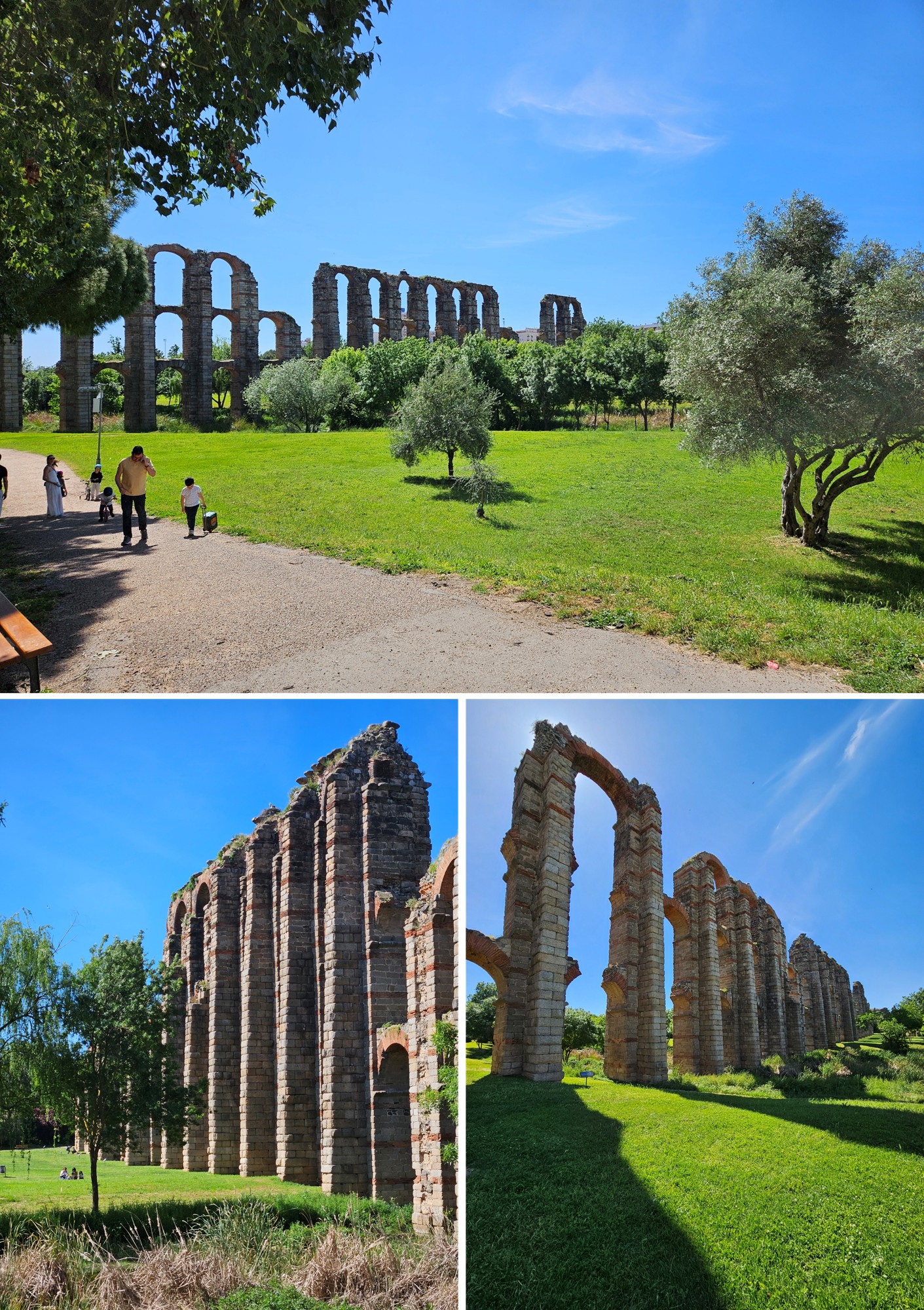
Around the Los Milagros Aqueduct, there is a wide green esplanade ideal for outdoor activities, strolling along its paths, or resting on one of the benches while admiring the landscape. Furthermore, storks’ nests can be seen at the top of the arches and pillars, adding a touch of life and movement to the place.
The San Lázaro Aqueduct, like the Los Milagros Aqueduct, was built during the 1st century AD. Its name comes from a hermitage dedicated to Saint Lazarus, which was demolished in the mid-20th century. This highly engineered structure bridged the uneven ground created by the Albarregas River and was linked to reservoirs and other aqueducts to ensure a constant water supply. The San Lázaro Aqueduct not only connected to the Los Milagros Aqueduct, but also to the Cornalvo Aqueduct, which was one of the three water pipelines in the Augusta Emerita, and of which very little remains.
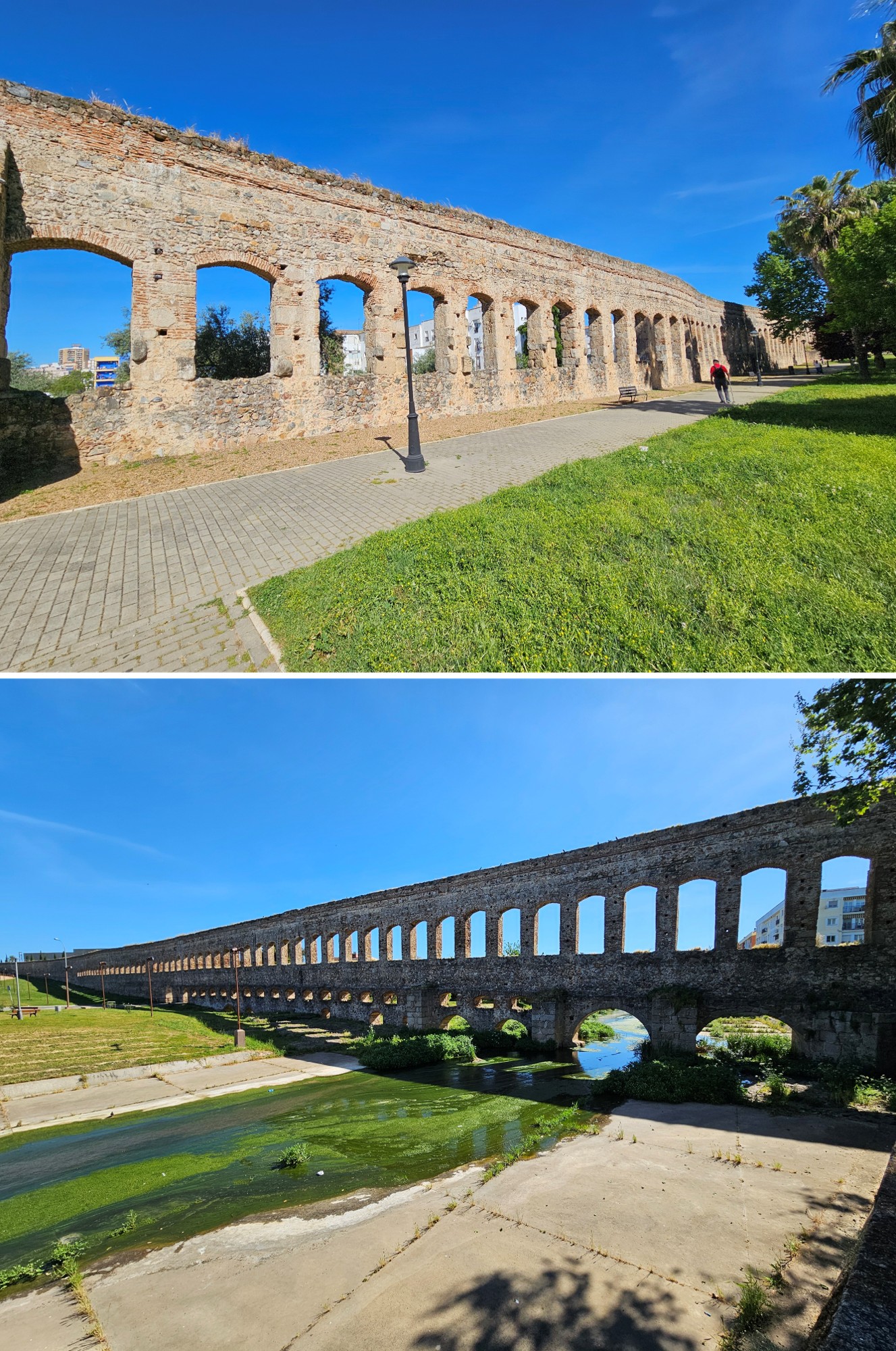
It is one of the longest aqueducts in Mérida, stretching over a kilometer and a half. Due to its age and construction, the San Lázaro Aqueduct also appears to be the oldest, similar in style to the building of the Roman Amphitheater. It combines granite ashlars and brick with a Roman concrete core (opus caementicium). Its design features a first level with eleven voussoir arches and cruciform pillars in the upper section. This complex reflects the versatility and sophistication of Roman engineering.
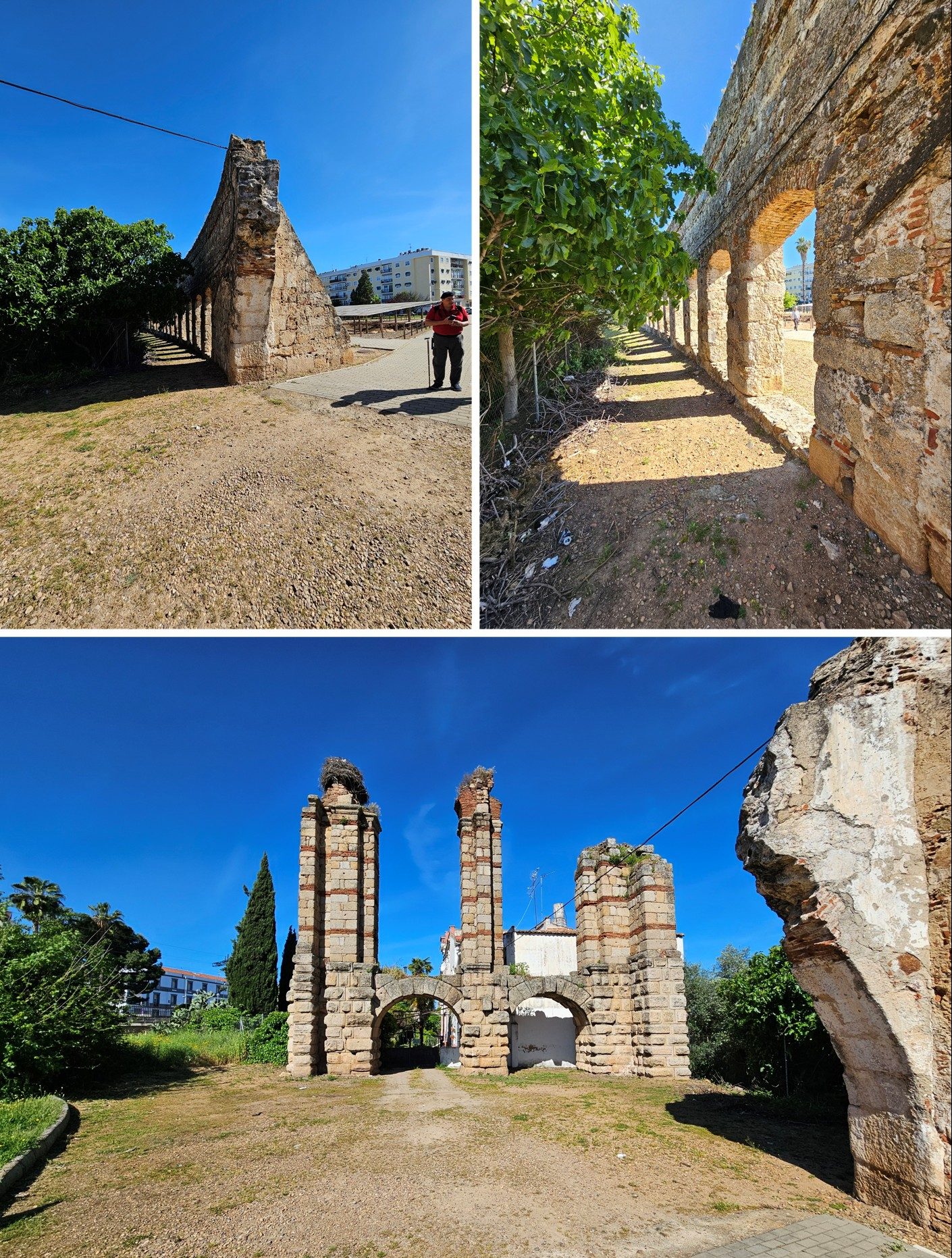
In its early days, the San Lázaro Aqueduct had underground sections that included maintenance entrances to facilitate cleaning. Currently, only three pillars and the intermediate arches remain.
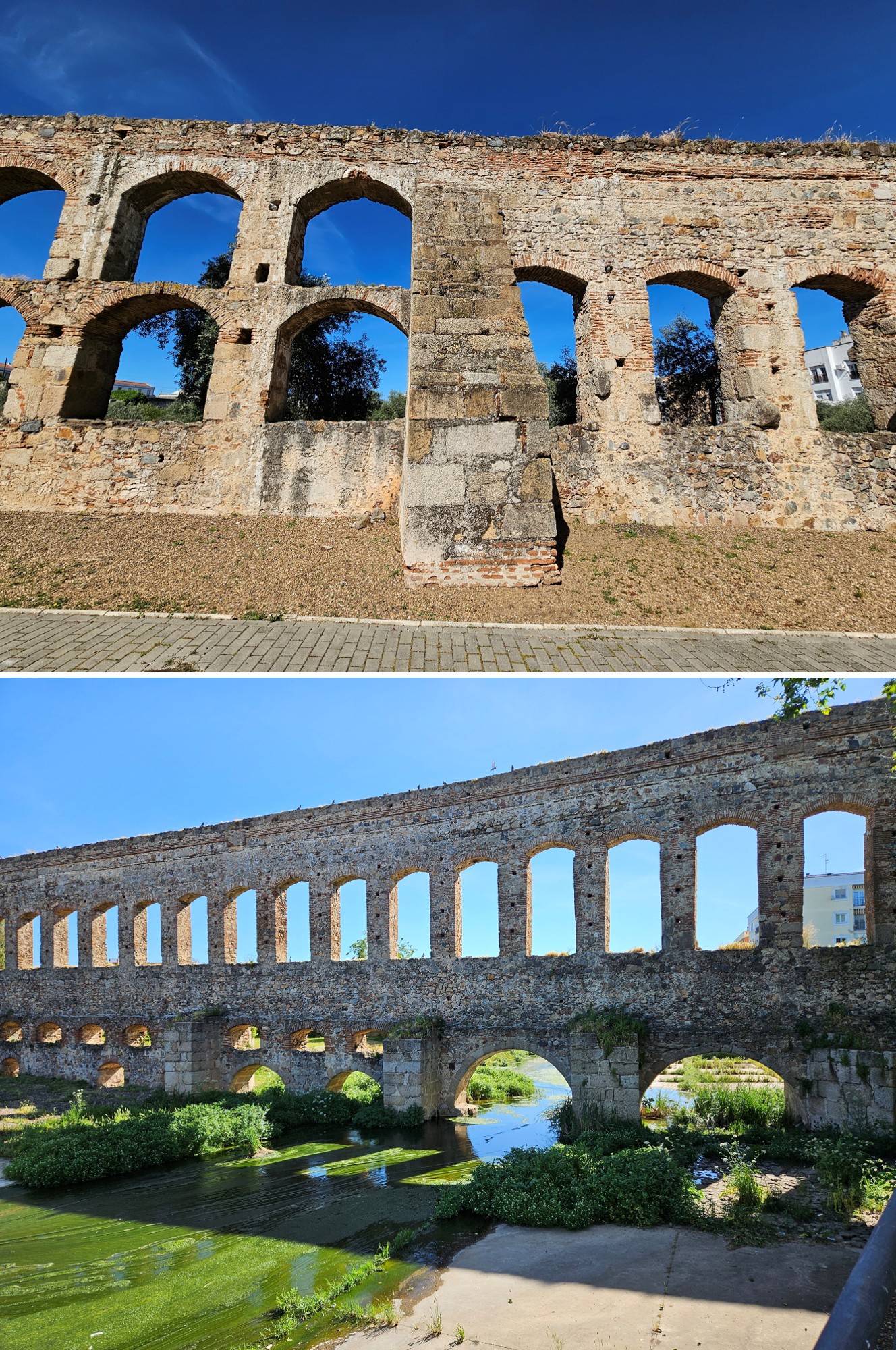
During the 16th century, due to the advanced deterioration of the Roman aqueduct of San Lázaro, it was decided to build a new one instead of restoring the original. This new aqueduct, known as the Rabo de Buey Aqueduct, was largely built with stones reused from the original Roman aqueduct. Despite this, much of the design and functionality of the old system was preserved.