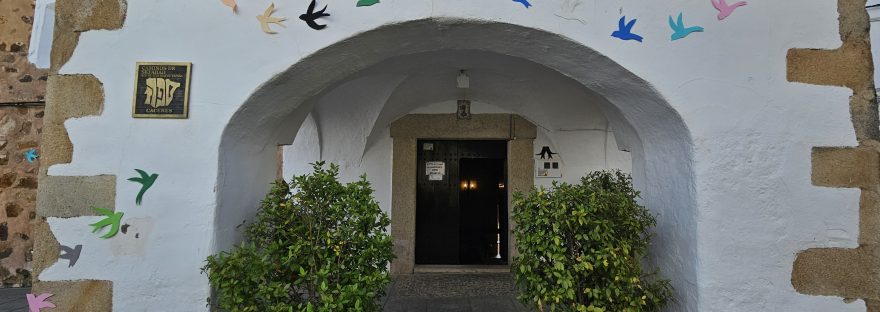
Construida en el siglo XV por iniciativa de la familia Golfín, la Ermita de San Antonio está situada en el mismo lugar que ocupaba la Sinagoga de la Judería Vieja de Cáceres, también conocida como el «barrio de la Quebrada». La evidencia histórica que respalda este hecho incluye una licencia eclesiástica otorgada el 22 de septiembre de 1470 por el obispo de Coria, Íñigo Manrique, la cual autorizaba la conversión de la antigua vivienda en una ermita dedicada a San Antonio de Padua. Seguir leyendo «Ermita de San Antonio, Cáceres, España»
Blog
Hermitage of San Antonio, Cáceres, Spain
Built in the 15th century as an initiative of the Golfín family, the Hermitage of San Antonio stands on the site once occupied by the synagogue of the Old Jewish Quarter of Cáceres, also known as the Quebrada Ward. Historical evidence supporting this includes an ecclesiastical license granted on September 22, 1470, by the Bishop of Coria, Íñigo Manrique, authorizing the conversion of the former dwelling into a chapel dedicated to Saint Anthony of Padua. Seguir leyendo «Hermitage of San Antonio, Cáceres, Spain»
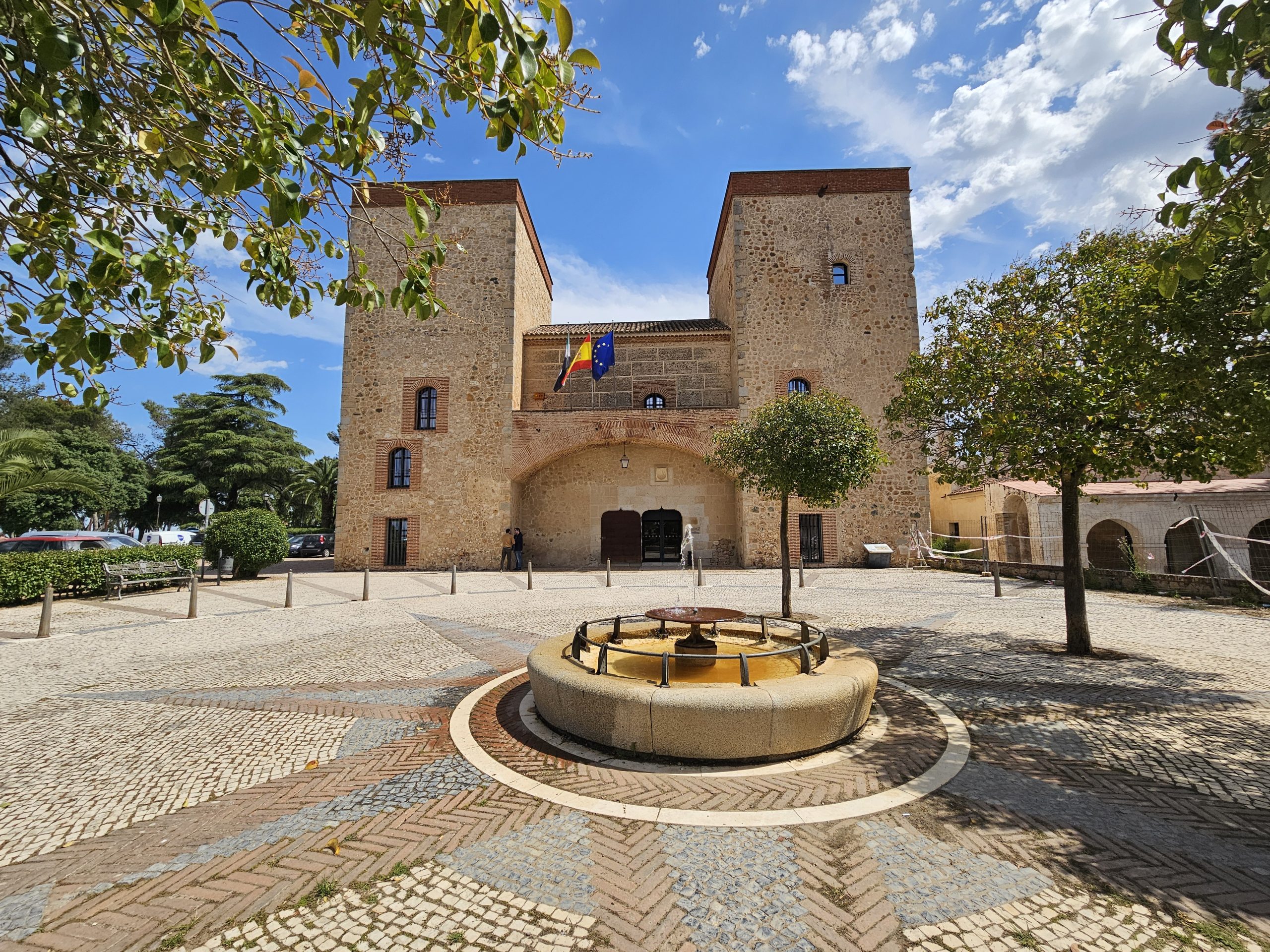
Provincial Archaeological Museum of Badajoz, Spain

The Provincial Archaeological Museum is located within the grounds of the old Islamic Alcazaba, at the highest point of Badajoz, in Extremadura, Spain. The museum was founded in 1867 with the purpose of preserving, researching, and sharing the archaeology of the present-day province of Badajoz. Seguir leyendo «Provincial Archaeological Museum of Badajoz, Spain»
Museo Arqueológico Provincial de Badajoz, España

La sede del Museo Arqueológico Provincial está ubicada dentro del recinto de la antigua Alcazaba islámica, en la zona más elevada de Badajoz, en Extremadura, España. Este museo fue fundado en 1867 con el propósito de conservar, investigar y difundir la arqueología de la actual provincia de Badajoz. Seguir leyendo «Museo Arqueológico Provincial de Badajoz, España»
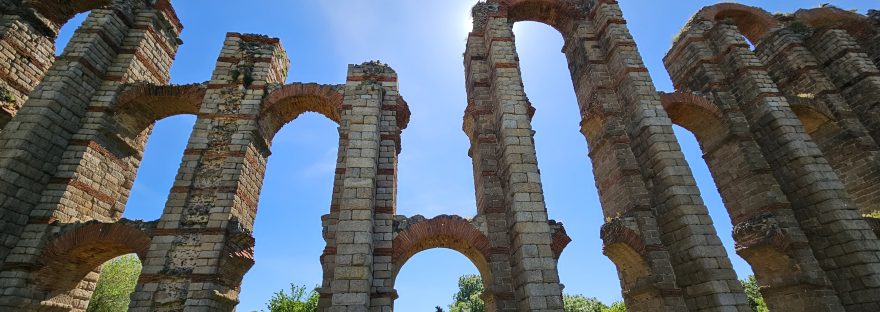
The Roman Aqueducts of Mérida, Spain
The Roman aqueducts of Mérida represent an important example of Roman engineering for supplying water to the city of Augusta Emérita (Mérida). Among them, the Aqueduct of Miracles stands out, famous for its arched span over the Albarregas Stream, and the Aqueduct of San Lázaro, also known as Rabo de Buey, which is longer and has remains from different construction periods. Both are part of the Archaeological Complex of Mérida, declared a World Heritage Site by UNESCO in 1993. Seguir leyendo «The Roman Aqueducts of Mérida, Spain»
Los acueductos romanos de Mérida, España
Los acueductos romanos de Mérida representan un ejemplo importante de la ingeniería del Imperio Romano para suministrar agua a la ciudad de Augusta Emérita (Mérida). Entre ellos, destacan el Acueducto de los Milagros, famoso por su tramo de arcos sobre el Arroyo Albarregas, y el Acueducto de San Lázaro, también conocido como Rabo de Buey, que es de mayor longitud y presenta restos de diferentes épocas constructivas. Ambos forman parte del Conjunto Arqueológico de Mérida, declarado Patrimonio de la Humanidad por la UNESCO en 1993. Seguir leyendo «Los acueductos romanos de Mérida, España»
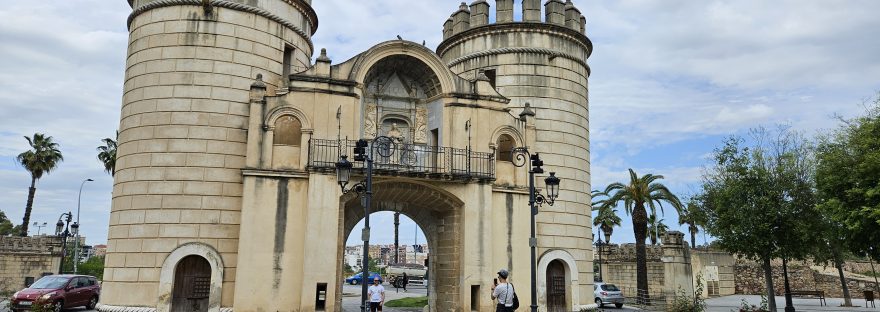
La Puerta de Palmas de Badajoz, España
La Puerta de Palmas, anteriormente conocida como “Puerta Nueva”, es uno de los monumentos más emblemáticos de Badajoz, ciudad de Extremadura, España, y una de las huellas más destacadas como antigua ciudad fortificada, que en siglos pasados necesitó de sus murallas para su defensa. Su construcción culminó en 1551 y se trató de un acceso monumental a la muralla que rodeaba esta ciudad, ubicada frente al Puente de Palmas. Seguir leyendo «La Puerta de Palmas de Badajoz, España»
The «Puerta de Palmas» of Badajoz, Spain
The «Puerta de Palmas», formerly known as the “Puerta Nueva,” is one of the most iconic monuments in Badajoz, a city in Extremadura, Spain, and one of the most notable remnants of its history as a fortified city, which in past centuries relied on its walls for defense. Construction was completed in 1551, and it served as a monumental entrance to the wall surrounding the city, located in front of the «Puente (Bridge) de Palmas». Seguir leyendo «The «Puerta de Palmas» of Badajoz, Spain»
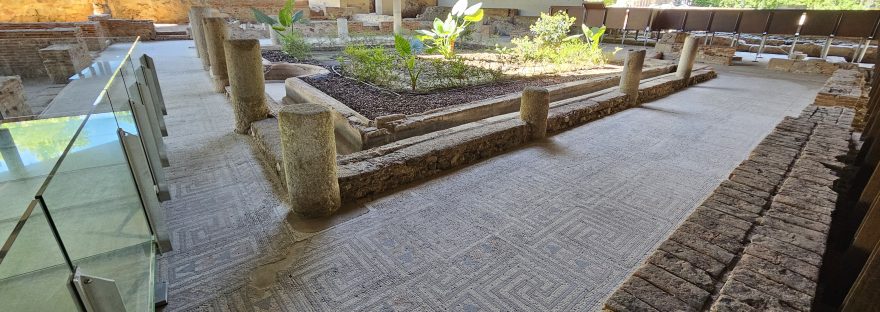
The House of the Amphitheater in Mérida, Spain
The House of the Amphitheater is more than just an archaeological site; it is a monument that offers a complete and diverse view of life in Roman Mérida. Its proximity to other historical sites such as the Roman Theater and the Amphitheater makes the visit even more enriching. It should be noted, however, that the name «House of the Amphitheater» simply refers to the location of the excavation, as it had no connection to the Amphitheater. Seguir leyendo «The House of the Amphitheater in Mérida, Spain»
The Palace of the “Golfines de Abajo”, Cáceres, Spain
One of the places we had the opportunity to visit in Cáceres was the Palace of the “Golfines the Lessors”, one of the city’s most emblematic buildings. It was built between 1510 and 1511 on top of an earlier house belonging to the Golfín lineage, a noble family that stood out during the Reconquista and kept this residence as their private home for more than 500 years. From the Church of San Francisco, crossing through Plaza de San Jorge, one can see one side of this extraordinary structure. Seguir leyendo «The Palace of the “Golfines de Abajo”, Cáceres, Spain»