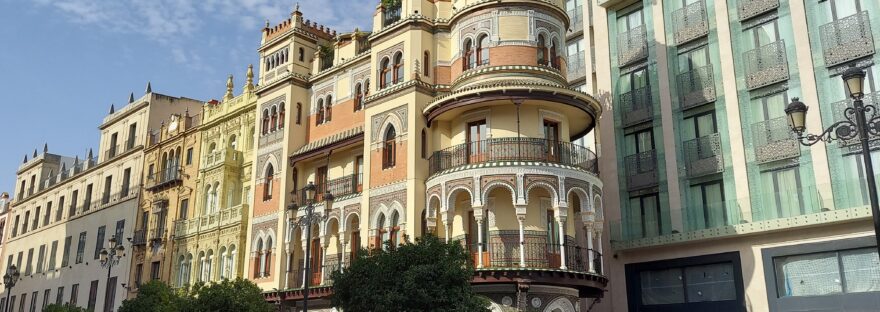
Walking along the Avenida de la Constitución in the city of Seville, you can see very beautiful buildings, with a variety of styles, depending on the time when they were built. However, there is one in particular that has us in love and that every time we visit this beautiful city, we have to stop to admire it, it is the Edificio de La Adriatica. Seguir leyendo «The Adriatica Building, unique to Seville»
Autor: La Viajera y El Mochilero
The House of (Pontius) Pilate in Seville
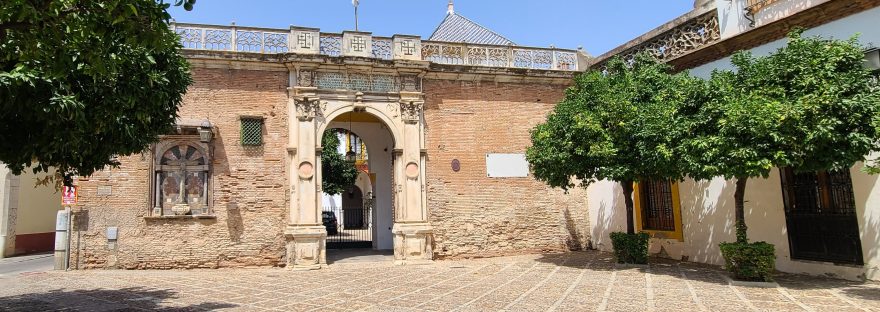
In the historic center of the city of Seville, is the best Andalusian noble building that is a clear example of Sevillian architecture of the sixteenth century, is the House of Pilate. Inspired by the Italian Renaissance, it was built in the late fifteenth and early sixteenth centuries, originally called the Palace of the «Adelantados Mayores de Andalucía». Seguir leyendo «The House of (Pontius) Pilate in Seville»
La Casa de Pilatos de Sevilla
En pleno casco histórico de la ciudad de Sevilla, se encuentra el mejor edificio nobiliario andaluz que constituye un claro ejemplo de la arquitectura sevillana del siglo XVI, es la Casa de Pilatos. Inspirado en el renacimiento italiano, se construyó a finales del siglo XV y principios del XVI, originalmente llamado el Palacio de los Adelantados Mayores de Andalucía. Seguir leyendo «La Casa de Pilatos de Sevilla»
The Stairway to Heaven of the «Clerecía» of Salamanca
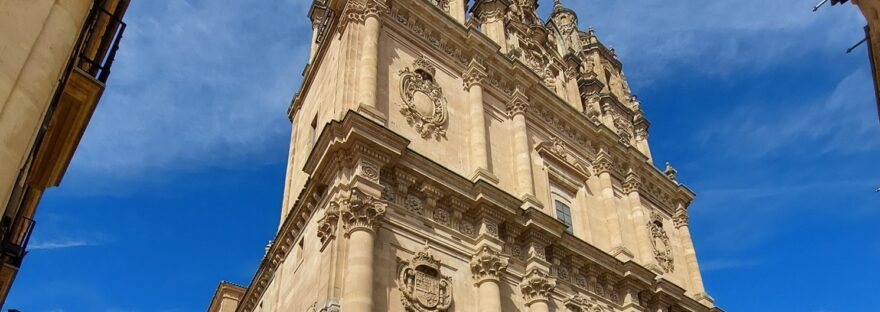
Of baroque style, the Clerecía is the name given to the building of the former Royal College of the Holy Spirit of the Society of Jesus, built in Salamanca between the XVII and XVIII centuries. This building, which today houses the Pontifical University of Salamanca, was begun in 1617, by order of Queen Margaret of Austria and Philip III. Its objective was to be the main center for the formation of the Jesuits who would later be sent to the American colonies and the Protestant countries of central Europe. Later, after the expulsion of the Jesuits from Spain, the building passed to the Real Clerecía de San Marcos, hence the abbreviation Clerecía. Subsequently, the Clerecía ceded the building (except for the church) to the Diocese of Salamanca, which installed the Seminary of San Carlos. Seguir leyendo «The Stairway to Heaven of the «Clerecía» of Salamanca»
La Escalera al Cielo de la Clerecía de Salamanca
De estilo barroco, la Clerecía es el nombre que recibe el edificio del antiguo Real Colegio del Espíritu Santo (o Santo Espíritu) de la Compañía de Jesús, construido en Salamanca entre los siglos XVII y XVIII. Este edificio, que hoy alberga a la Universidad Pontificia de Salamanca fue iniciado en el año 1617, por orden de la reina Margarita de Austria y Felipe III. Su objetivo, ser el centro principal para la formación de los jesuitas que posteriormente enviarían a las colonias de América y los países protestantes del centro de Europa. Más tarde y tras la expulsión de los jesuitas de España, pasa el edificio a la Real Clerecía de San Marcos, de ahí la abreviatura a la Clerecía. Posteriormente, ésta cedió el edificio (salvo el templo) a la Diócesis de Salamanca, la cual instaló en él, el Seminario de San Carlos. Seguir leyendo «La Escalera al Cielo de la Clerecía de Salamanca»
Los Patios Cordobeses, un festival de colores
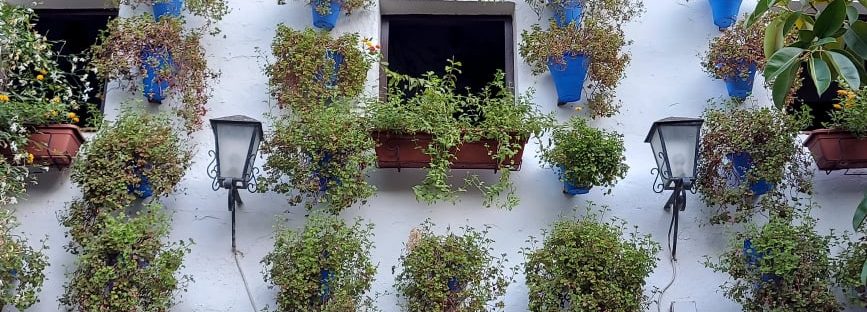
No hay visita a Córdoba que no incluya darle un vistazo a sus patios, los famosos patios cordobeses. No importa la época del año, puede ser visitado uno que otro que se encuentre abierto al público. Sin embargo, es a comienzo del mes de mayo que se celebra el Festival de los Patios Cordobeses y este año se celebrará del 3 al 15 de mayo de 2022. Seguir leyendo «Los Patios Cordobeses, un festival de colores»
The Courtyards of Cordoba, a festival of colors
A visit to Cordoba must include taking a look at its patios, the famous courtyards of Cordoba. Regardless of the time of the year, you can visit one of various courtyards that are open to the public. However, it is at the beginning of May that the «Festival de los Patios Cordobeses» or the Courtyards Festival of Cordoba is celebrated and in the year 2022 it will be held from May 3 to 15. Seguir leyendo «The Courtyards of Cordoba, a festival of colors»
El Palacio de Viana y sus patios
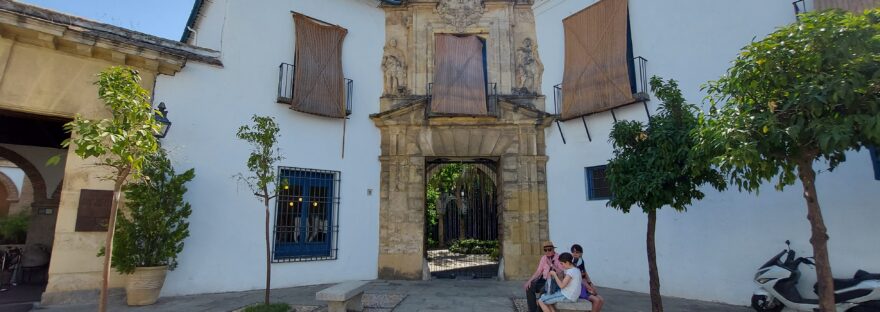
En nuestra segunda visita a Córdoba, confirmamos una vez más por qué esta ciudad española es reconocida internacionalmente por sus patios hermosos. Y nos tocó esta vez ir en verano, así que estábamos de plácemes con las bellezas floridas que allí encontraríamos. Seguir leyendo «El Palacio de Viana y sus patios»
The Viana Palace and its patios
On our second visit to Cordoba, we confirmed once again why this Spanish city is internationally renowned for its beautiful patios. And this time it was our turn to go in summer, so we were delighted with the flowery beauties we would find there. Seguir leyendo «The Viana Palace and its patios»
El Castillo de Gibralfaro, símbolo de la ciudad de Málaga
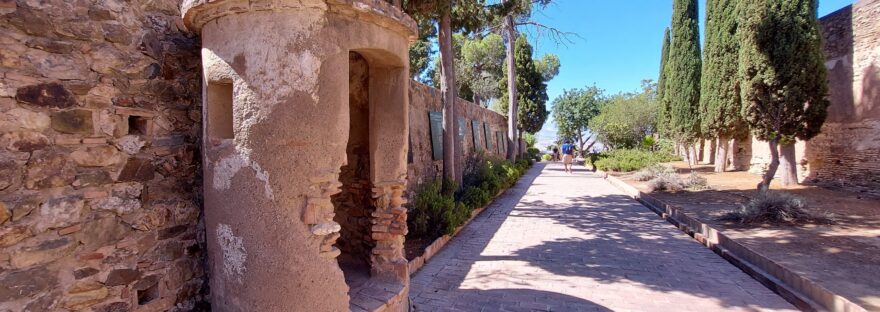
La Ciudad de Málaga, se extiende a sus pies, se trata del Castillo de Gibralfaro, una de las fortalezas más invencibles de la península ibérica. Seguir leyendo «El Castillo de Gibralfaro, símbolo de la ciudad de Málaga»