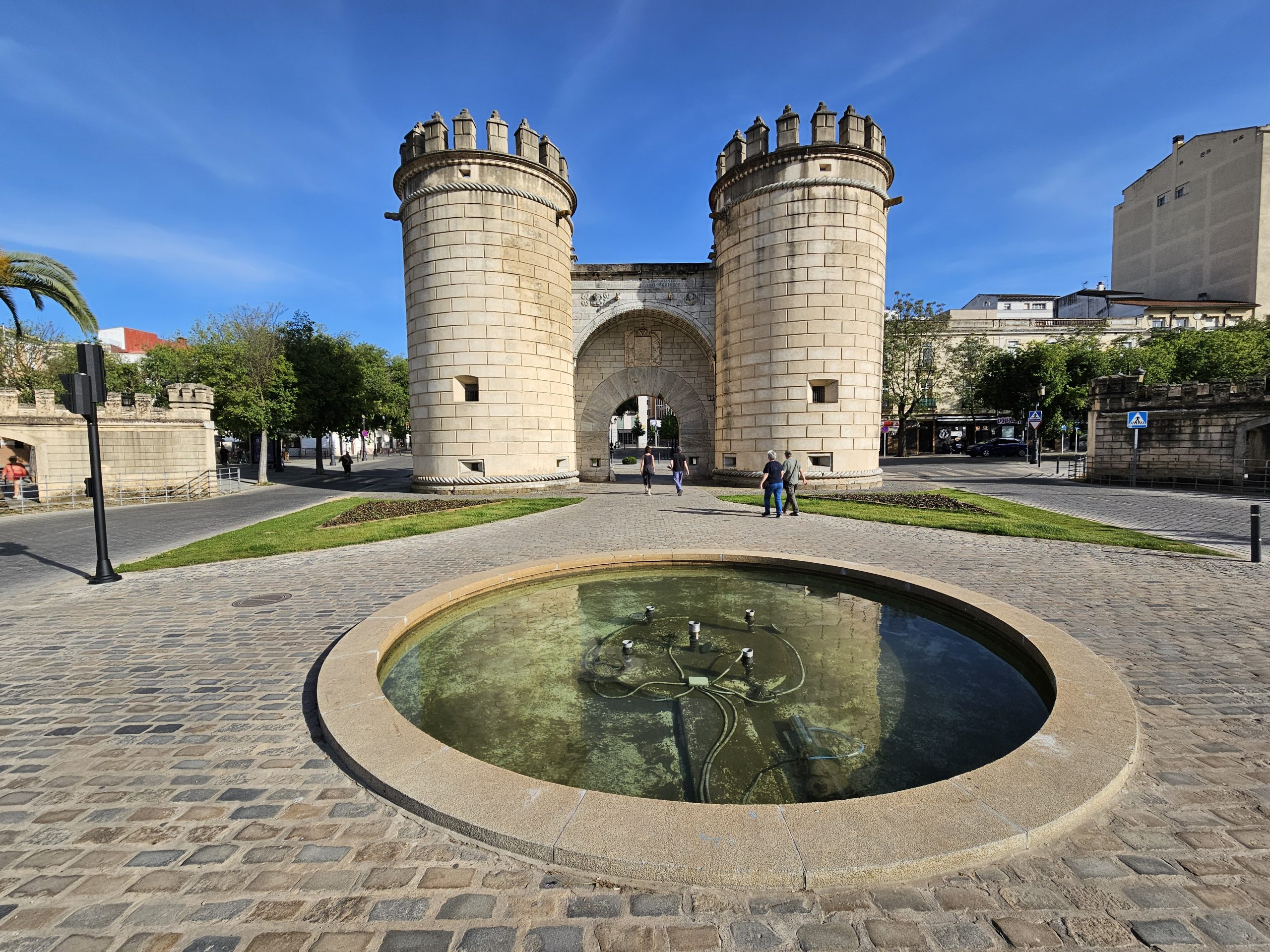
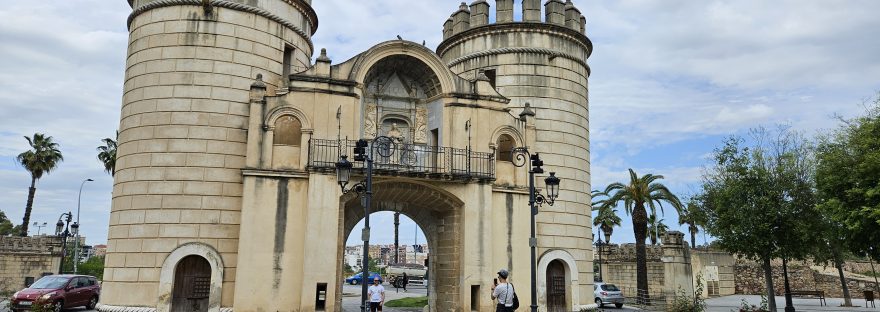
The «Puerta de Palmas», formerly known as the “Puerta Nueva,” is one of the most iconic monuments in Badajoz, a city in Extremadura, Spain, and one of the most notable remnants of its history as a fortified city, which in past centuries relied on its walls for defense. Construction was completed in 1551, and it served as a monumental entrance to the wall surrounding the city, located in front of the «Puente (Bridge) de Palmas».
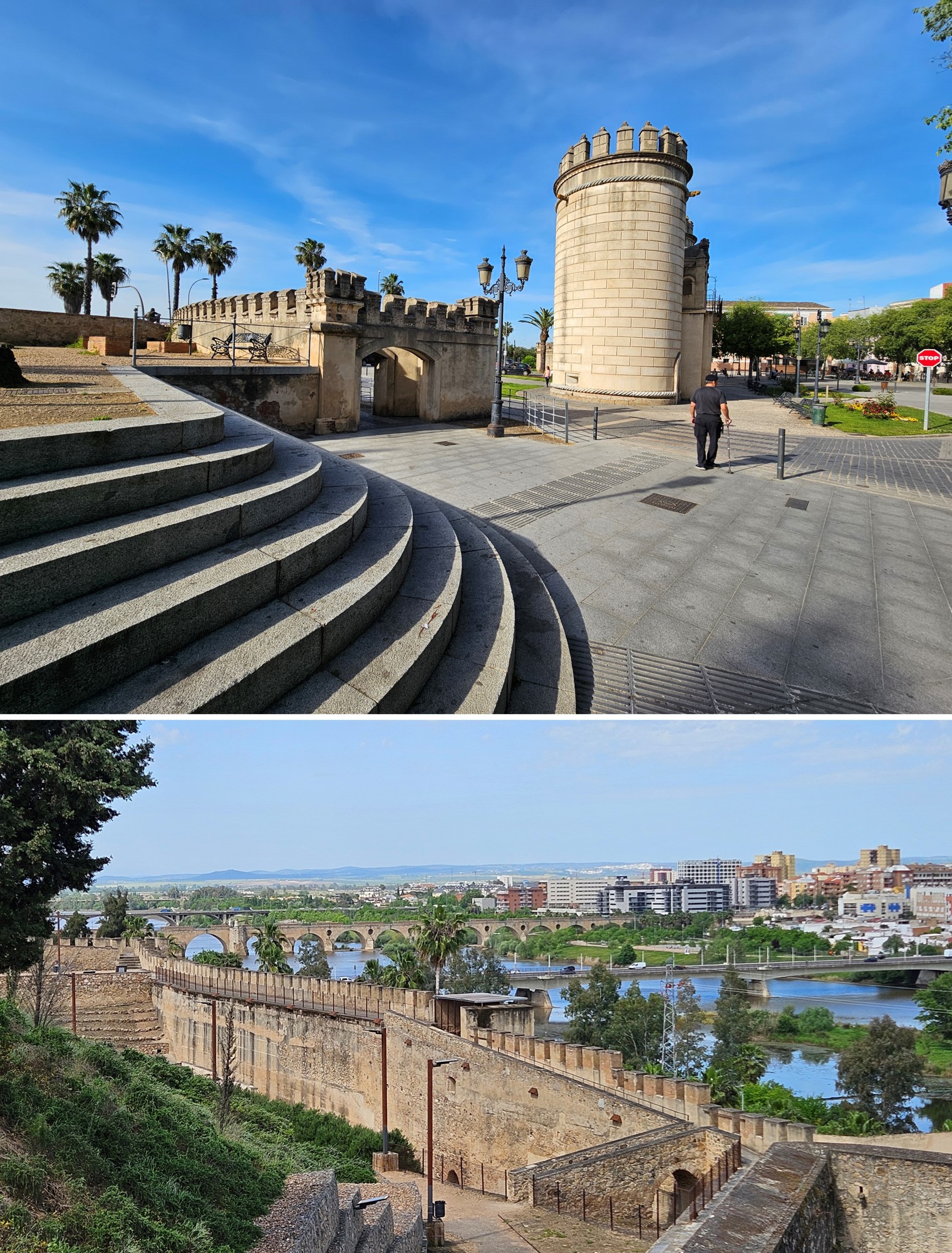
In the 17th century, the wall adjacent to the «Puerta de Palmas» played a crucial role in the rivalry with Portugal. Although relations between the two territories were peaceful at times, during the 17th century, following Portugal’s uprising and declaration of independence in 1668, numerous military operations took place in Badajoz. These events spurred interest in constructing and renovating the wall, while preserving the structure of the «Puerta de Palmas», which remained intact, though the floodable moats were removed to improve its defense.
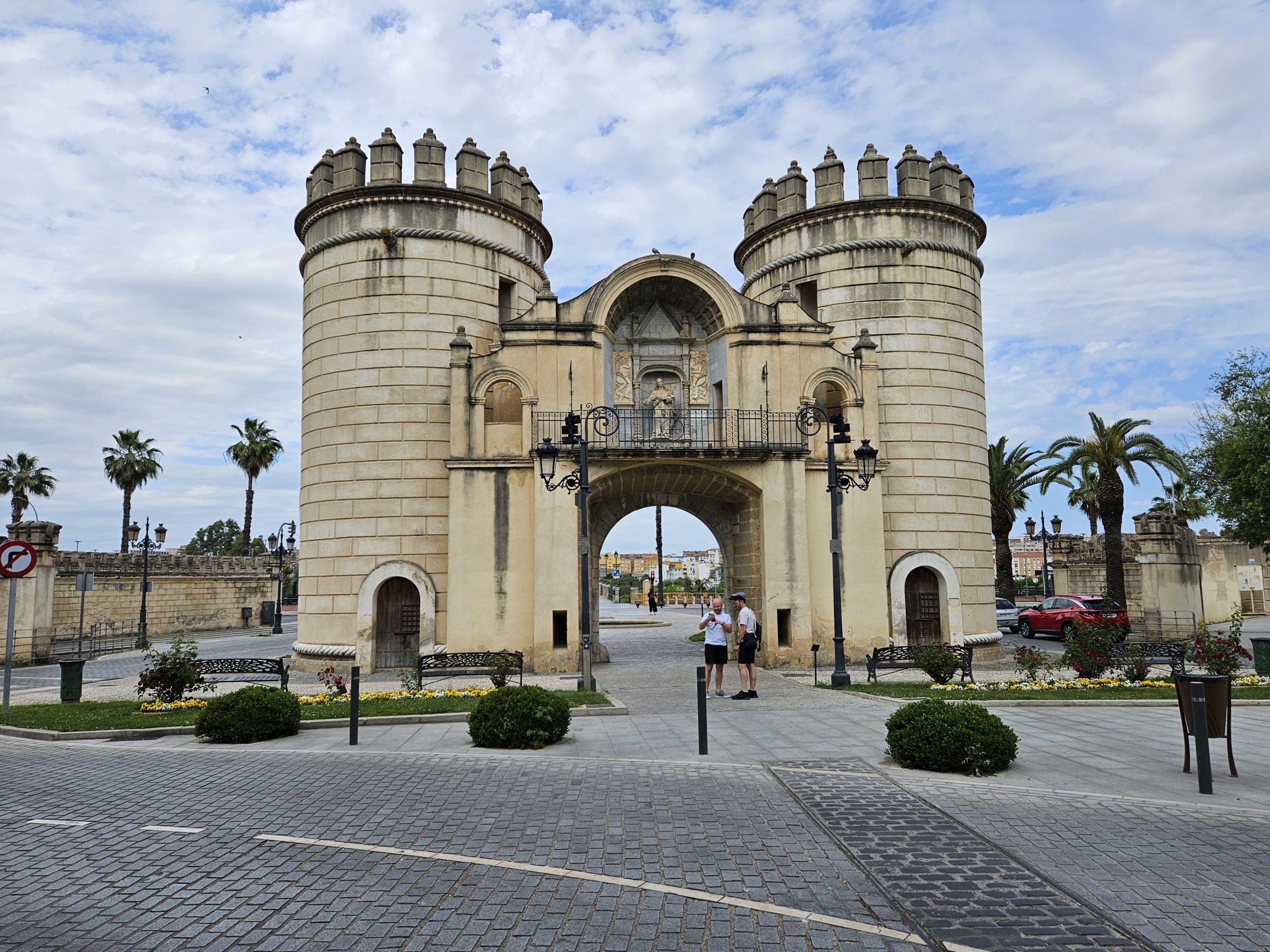
The «Puerta de Palmas», like other similar structures that served defensive and access-control purposes, also has a symbolic function, similar to triumphal arches honoring sovereigns and kings of the time. Following Renaissance style, it imitates the triumphal arches of Roman civilization. The structure consists of a commemorative arch flanked by two solid-looking cylindrical towers, topped with battlements and decorated at the top and base with ornamental cord details. The towers served as a royal prison until the late 19th century.
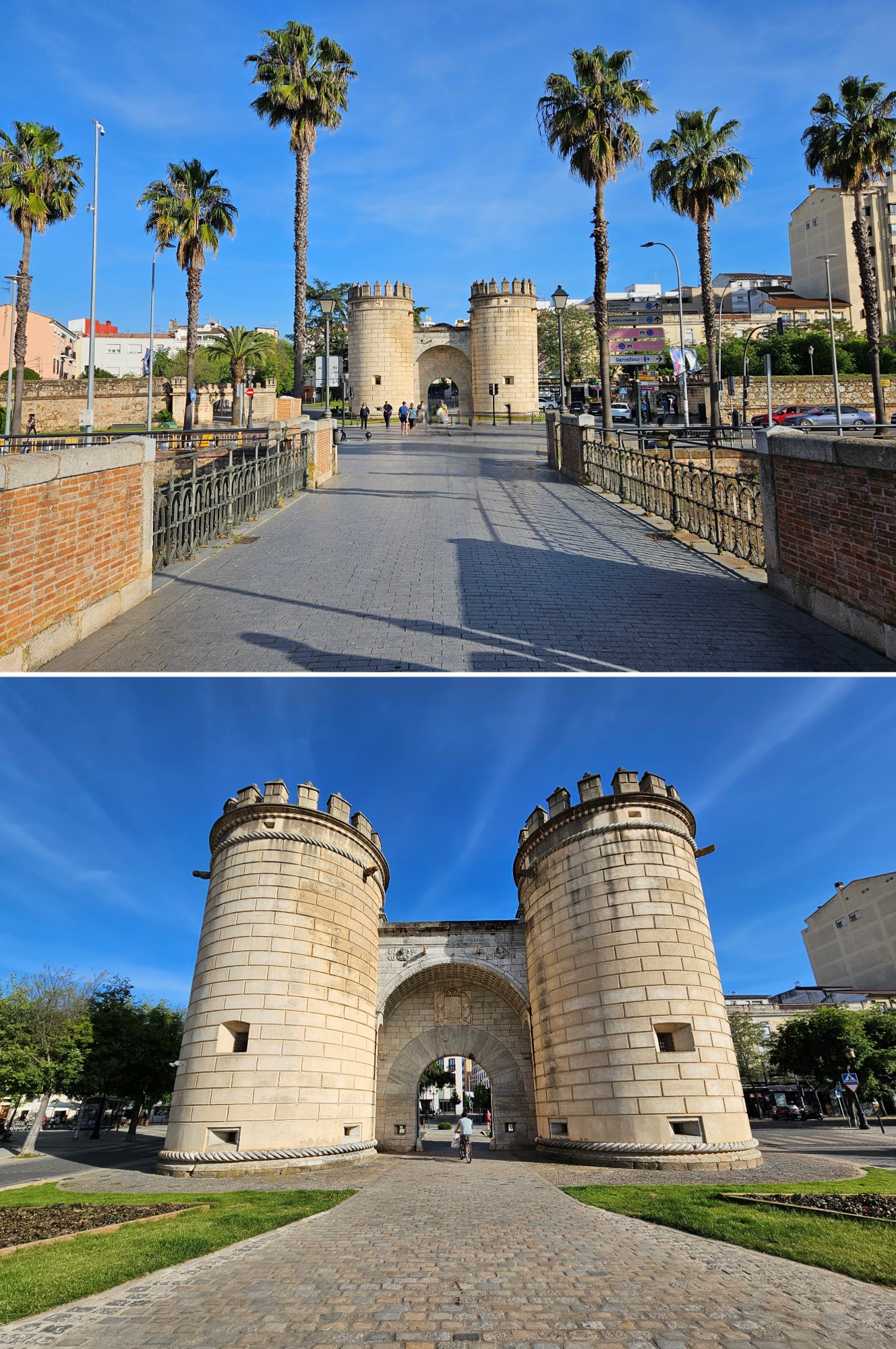
The façade facing the bridge and the Guadiana River features a double semi-circular arch, decorated with coffers (hollow geometric ornaments set inside the arch), medallions, and other Renaissance-style decorative elements. On this exterior side, there is a preserved inscription or plaque dating to 1551, when Philip II was prince and Charles V was emperor.
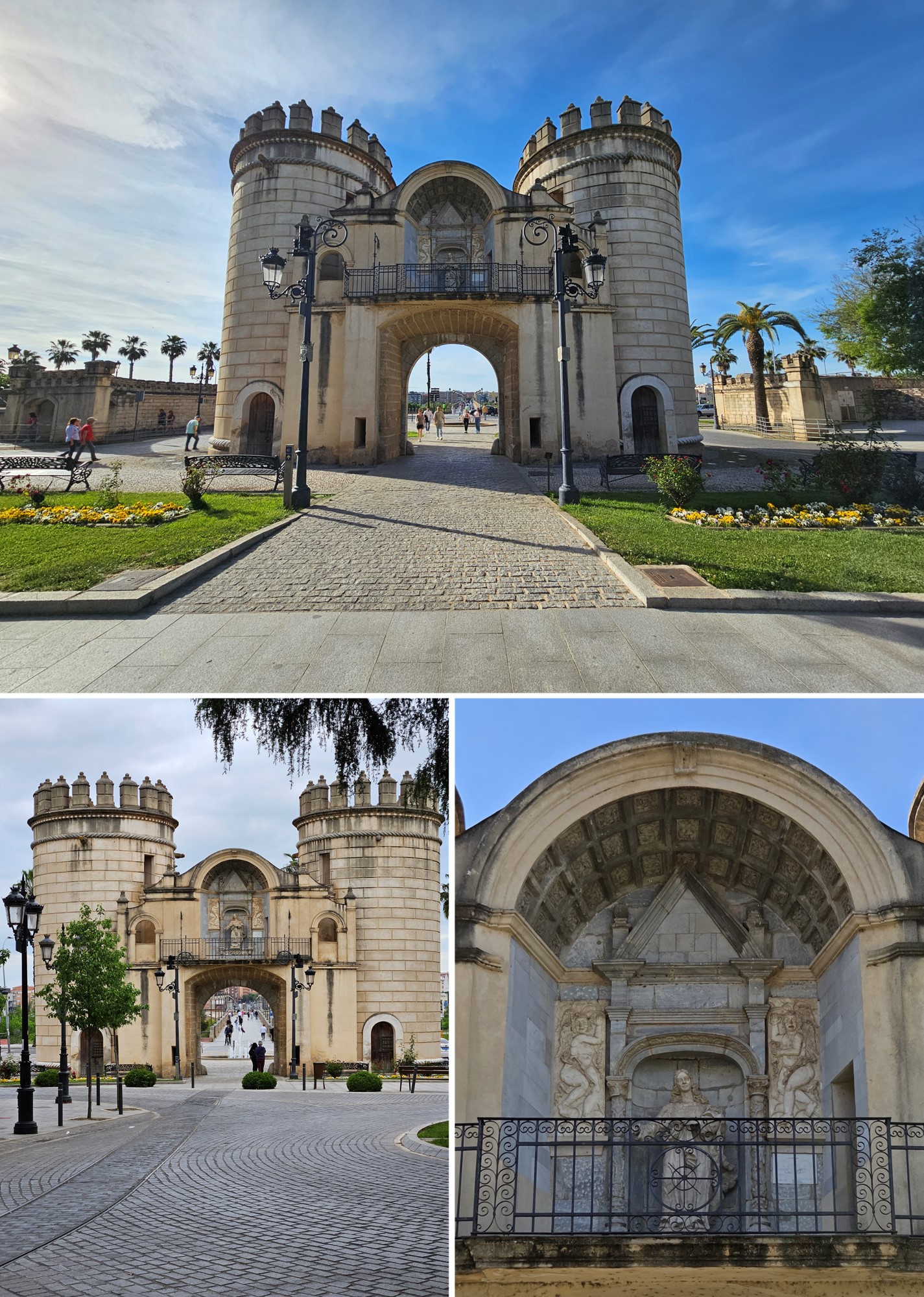
In contrast, the opposite side of the «Puerta de Palmas», facing the old city, presents a more complex façade, consisting of a terrace and a triple niche, likely added in later stages after the original construction. On the terrace between the two towers, there is a chapel dedicated to Our Lady of the Angels. The sculpture of the Virgin was restored in 1960 by the municipal architect and art critic Francisco Vaca Morales.
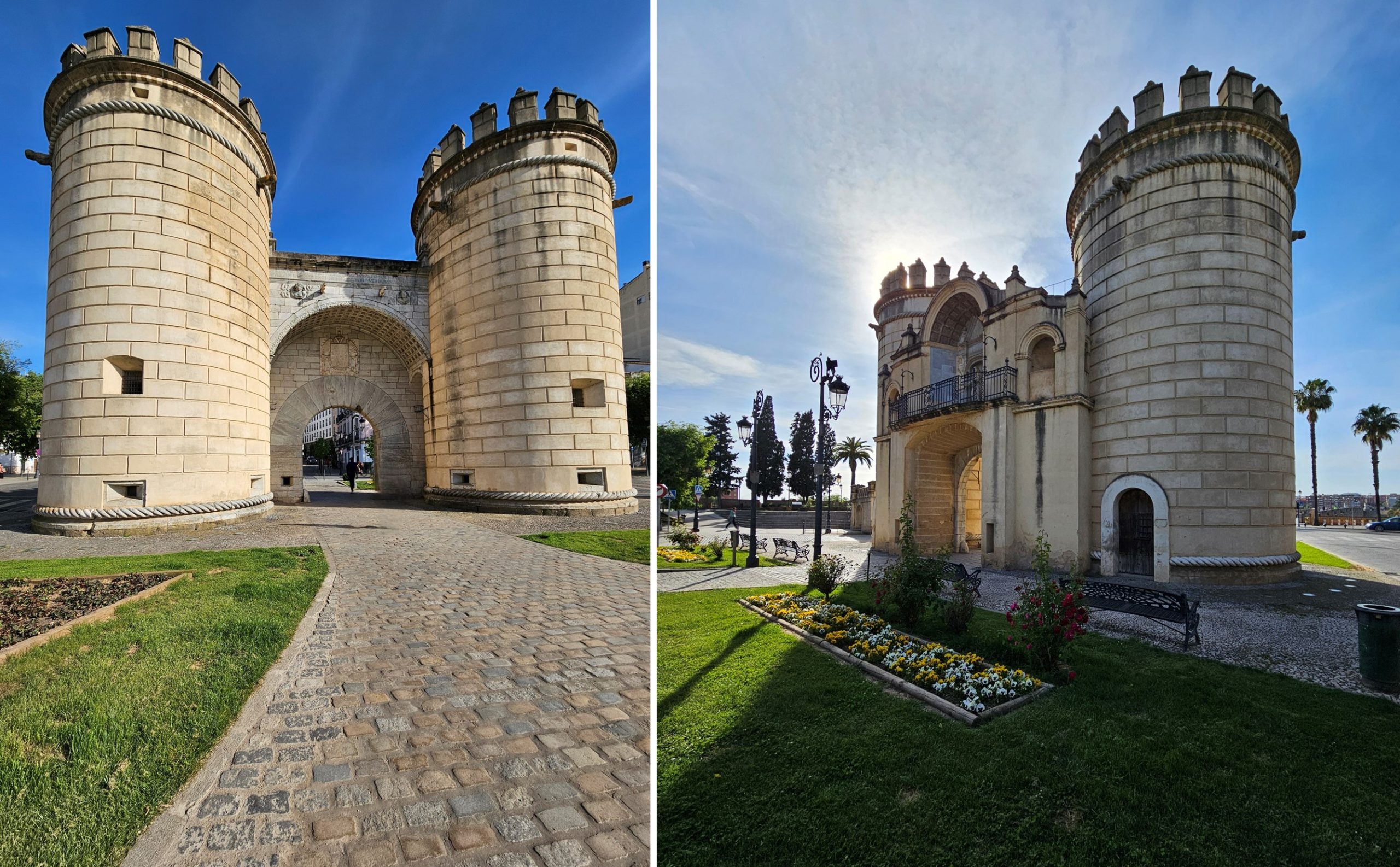
Over the centuries, the surroundings of the «Puerta de Palmas» underwent numerous structural and adjacent-element remodelings, though it always retained its role as a fortified entry point to the city and later as a customs and tax control post. Until fairly recently, the two towers served as a royal prison for serious offenders, according to historical records. Today, it primarily functions as a roundabout and an important symbol of the Extremadura city of Badajoz.