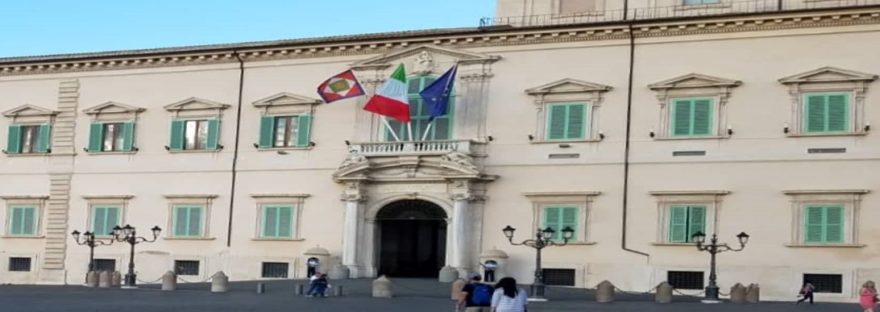
Entre los diez palacios más grandes del mundo se encuentra el Palazzo Quirinale de Roma. Ubicado precisamente en Quirinale o Quirinalis, nombre que se le da a la más alta de las siete lomas de Roma. Esto en honor a Quirinus, dios de la Guerra en la mitología romana y uno de los dioses principales de los romanos. Seguir leyendo «Palazzo Quirinale de Roma»
Autor: La Viajera y El Mochilero
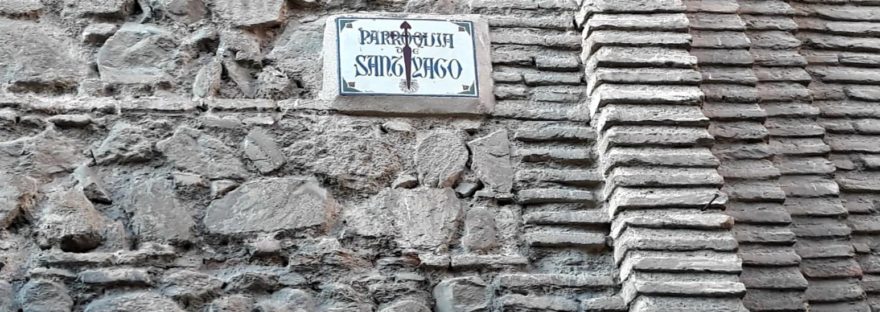
Iglesia Santiago el Mayor del Arrabal, Toledo
Al entrar a la ciudad española de Toledo por la Puerta de Bisagara, se llega al barrio Arrabal y de inmediato con lo que algunos han llamado “el conjunto mudéjar más imponente de Toledo”, la Iglesia de Santiago el Mayor. De ladrillo y mampostería del siglo XIII, se convirtió y se edificó sobre una antigua mezquita. Seguir leyendo «Iglesia Santiago el Mayor del Arrabal, Toledo»
«Santiago el Mayor del Arrabal» Church, Toledo
Upon entering the Spanish city of Toledo through the Bisagara Gate, you will reach the Arrabal neighborhood and immediately with what some have called “the most imposing Mudejar complex in Toledo,” the Church of Santiago el Mayor. Brick and masonry of the thirteenth century, it was converted and edifice over an old mosque. Seguir leyendo ««Santiago el Mayor del Arrabal» Church, Toledo»
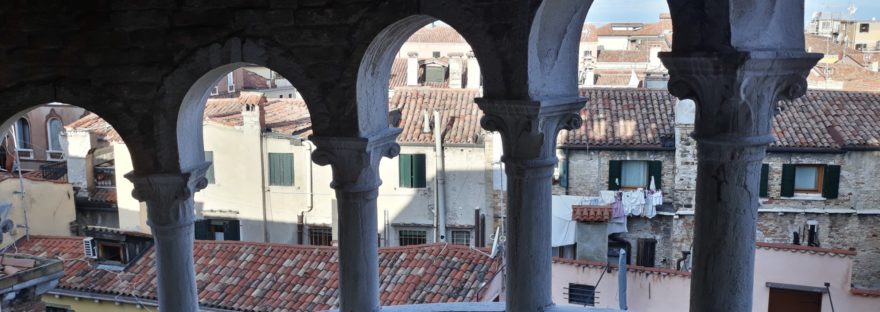
Scala Contarini del Bovolo, Venecia
Caminando por los callejones de la ciudad italiana de Venecia, encontramos una joya escondida entre edificios. Se trata del “Palazzo Contarini del Bovolo” y su famosa “Scala Contarini del Bovolo”. Seguir leyendo «Scala Contarini del Bovolo, Venecia»
Scala Contarini del Bovolo, Venice
Walking through the alleys of the Italian city of Venice, we found a hidden gem between buildings. This is the «Palazzo Contarini del Bovolo» and its famous «Scala Contarini del Bovolo». Seguir leyendo «Scala Contarini del Bovolo, Venice»
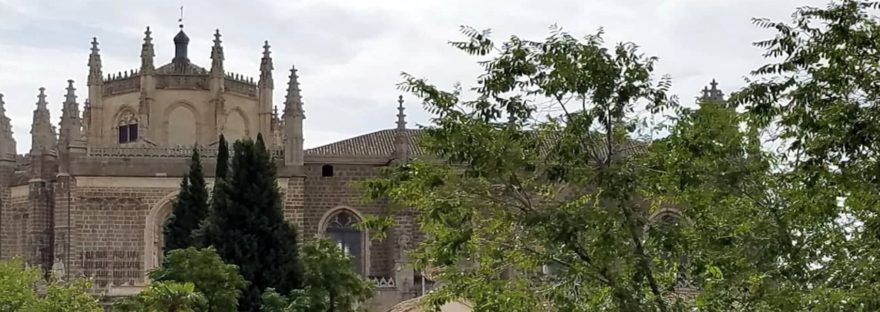
El Monasterio San Juan de los Reyes de Toledo
Los Reyes Católicos en agradecimiento por la victoria en la batalla de Toro de 1476 donde quedó resuelta la sucesión al trono a favor de la princesa Isabel, mandaron a construir el Monasterio de San Juan de los Reyes en Toledo, España. En 1477 el arquitecto Juan Guas comenzó las obras y diez años más tarde, terminaron la capilla mayor, la nave principal de la iglesia y las bóvedas. Su estilo es gótico, del denominado “hispano-flamenco” o del reinado de los Reyes Católicos. Seguir leyendo «El Monasterio San Juan de los Reyes de Toledo»
The Monastery of «San Juan de los Reyes» – Toledo
The Catholic Monarchs in gratitude for the victory at the battle of Toro in 1476, battle which resolved the succession to the throne in favor of Princess Isabel, ordered the construction of the Monastery of «San Juan de los Reyes» in Toledo, Spain. In 1477 the architect Juan Guas began the works and ten years later, the main chapel, the main nave of the church and the vaults were completed. Its style is Gothic, the so-called «Hispanic-Flemish» or the reign of the Catholic Monarchs.
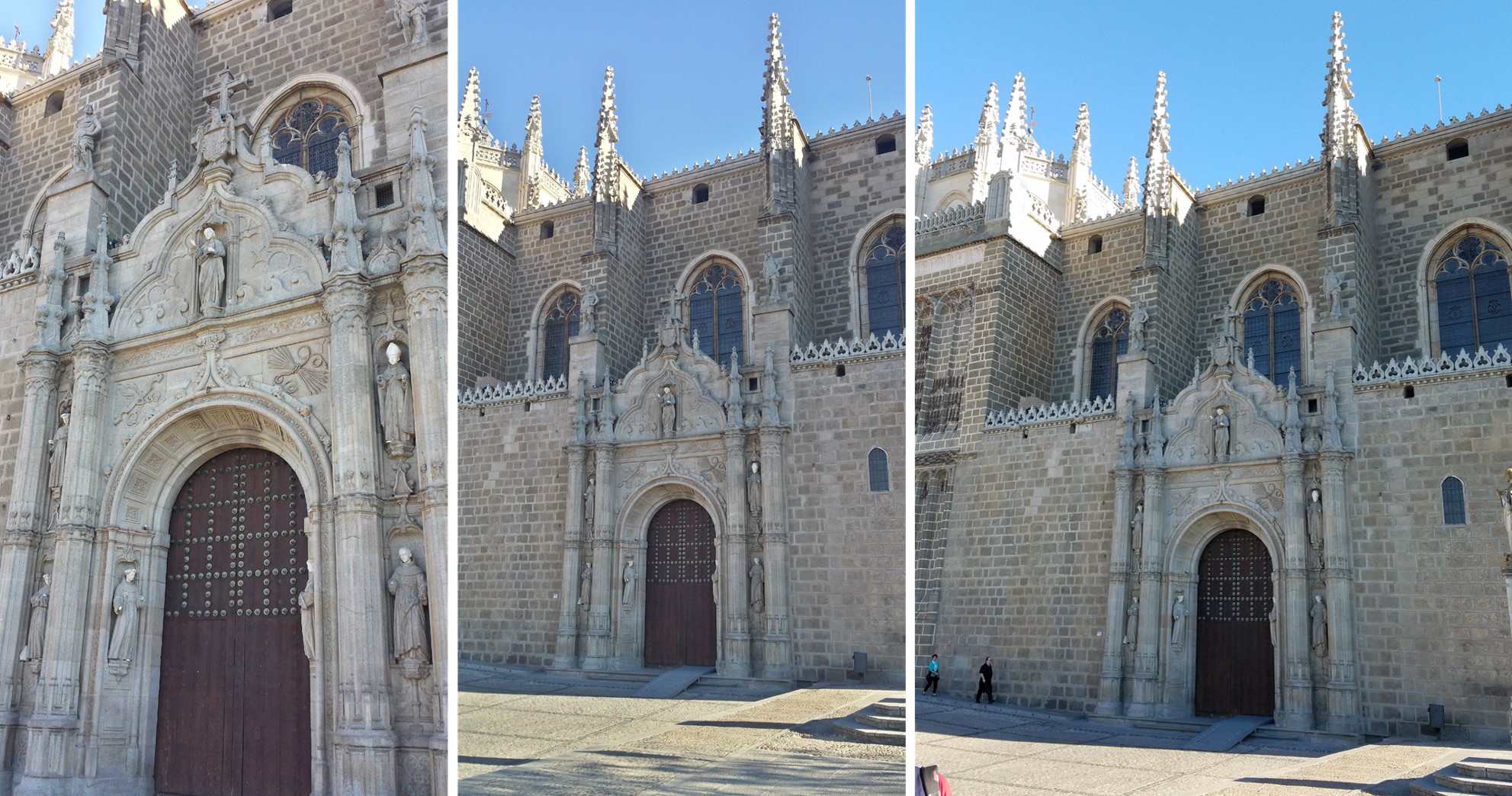
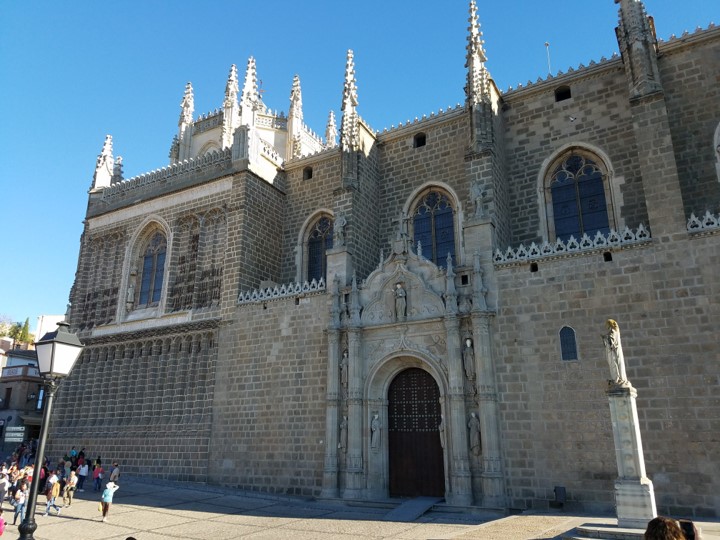
On the facade of the Monastery of «San Juan de los Reyes», the symbolism of royal power is reinforced through the statues of heralds.
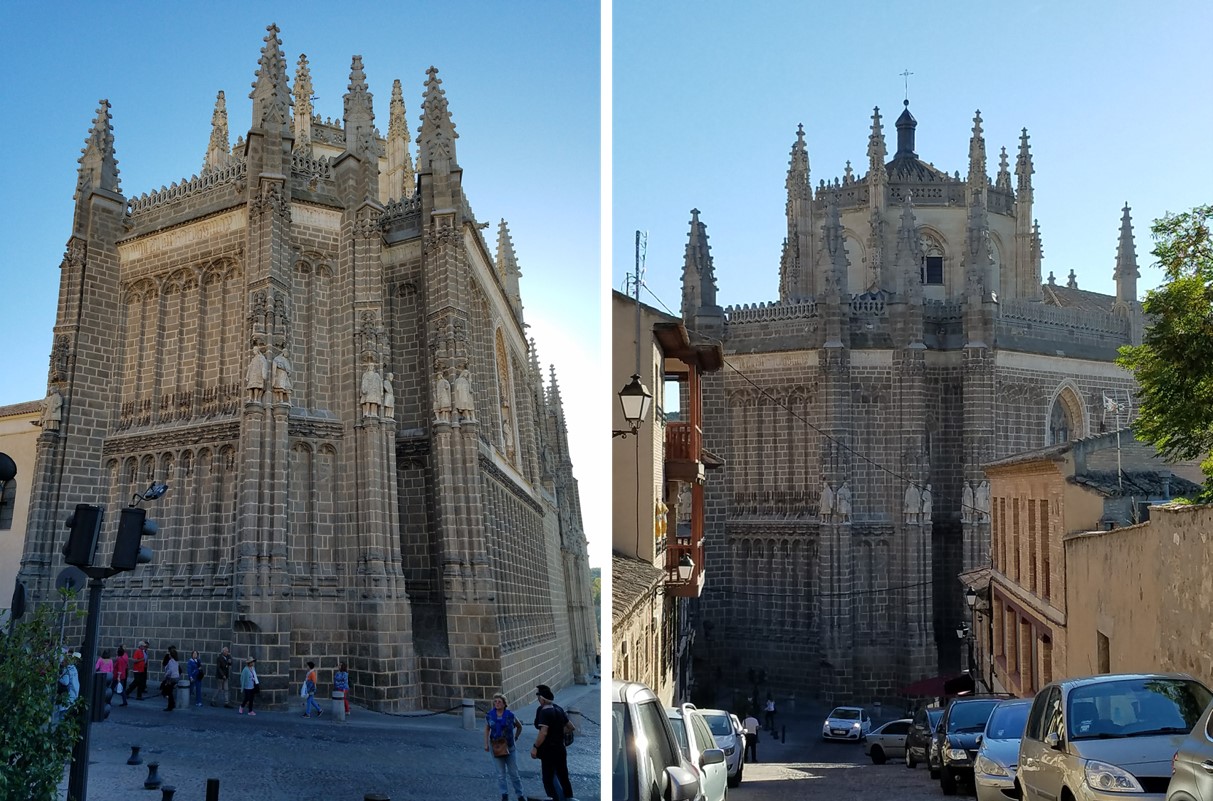
In total there are twelve, six are observed here. The heralds were in charge of preceding the monarchs in their appearances in public and presenting their messages in the courts of other kingdoms. Originally it was intended that this Monastery were to house the remains of the monarchs upon their deaths. Eventually the honor was bestowed to Granada with the construction of the Royal Chapel.
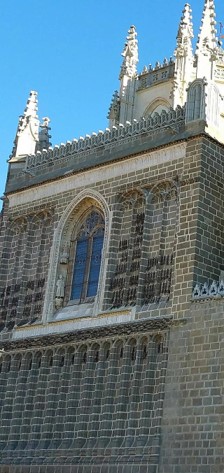
The chains and shackles of the liberated Christian prisoners are found hanging from the exterior walls. The queen ordered they be so exhibited here in 1494.
The Cloister
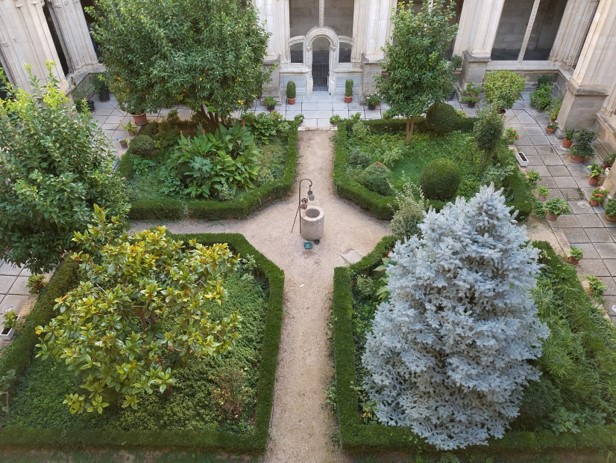
In the Cloister of the Monastery of «San Juan de los Reyes» in Toledo, Spain, we can find a garden with pomegranates, myrtles, cypress, orange, and other species. With a square layout, the courtyard of the cloister usually has a place in the center where four paths cross. In this case, in the center is the water well.
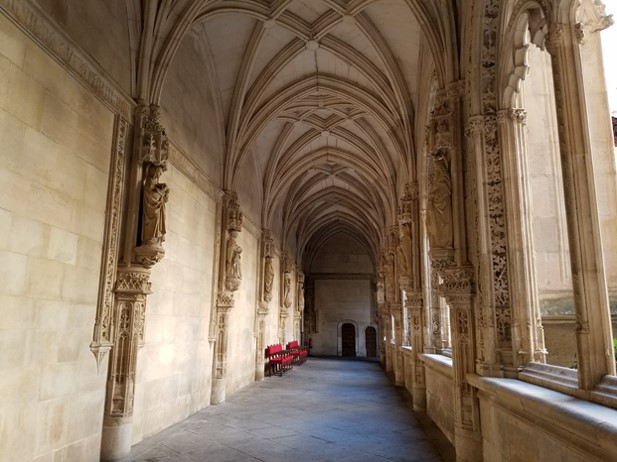
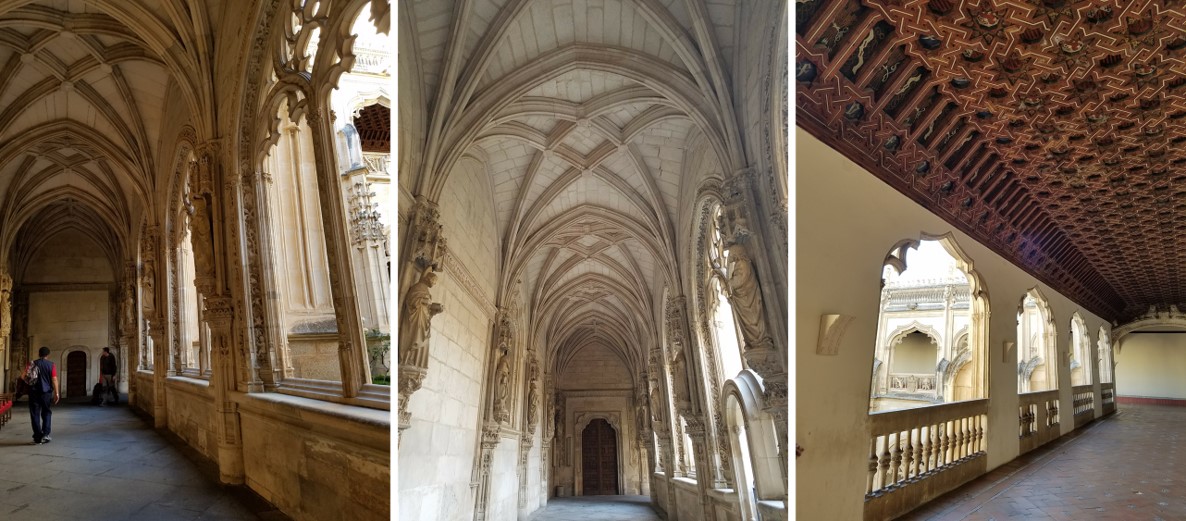
The windows that open to the cloister allow the flow of a very unique lighting to the enclosure. One can also observe the beautifully carved stone, as if it were filigree and can find the works of the sculptor Cecilio Béjar of Toledo, who also worked until 1967 on the restoration of the images of the saints that are found in the lower cloister. Among the sculptures made by Béjar are dragons, apes and exotic birds. The gargoyles found have the function of relieving the water collected from the roof, serving as a drain.
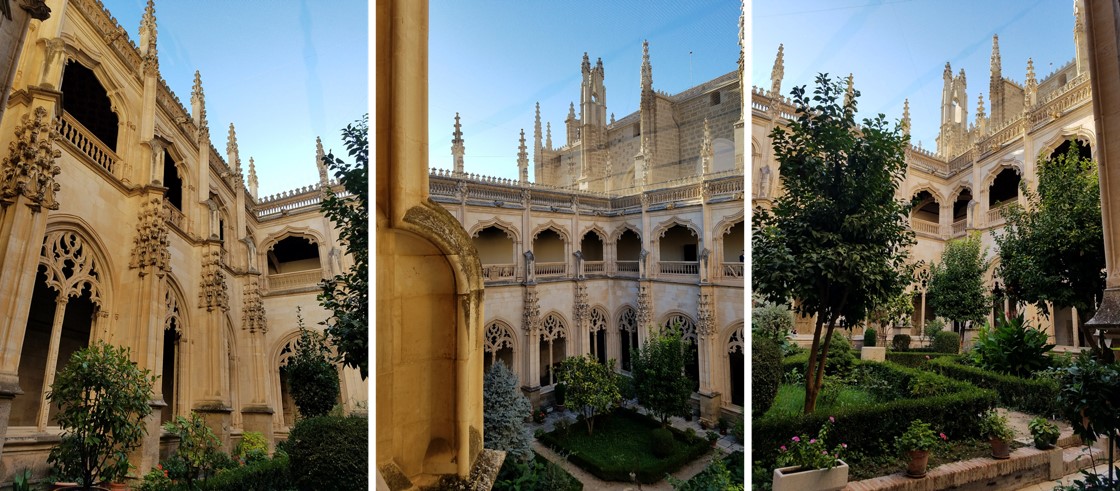
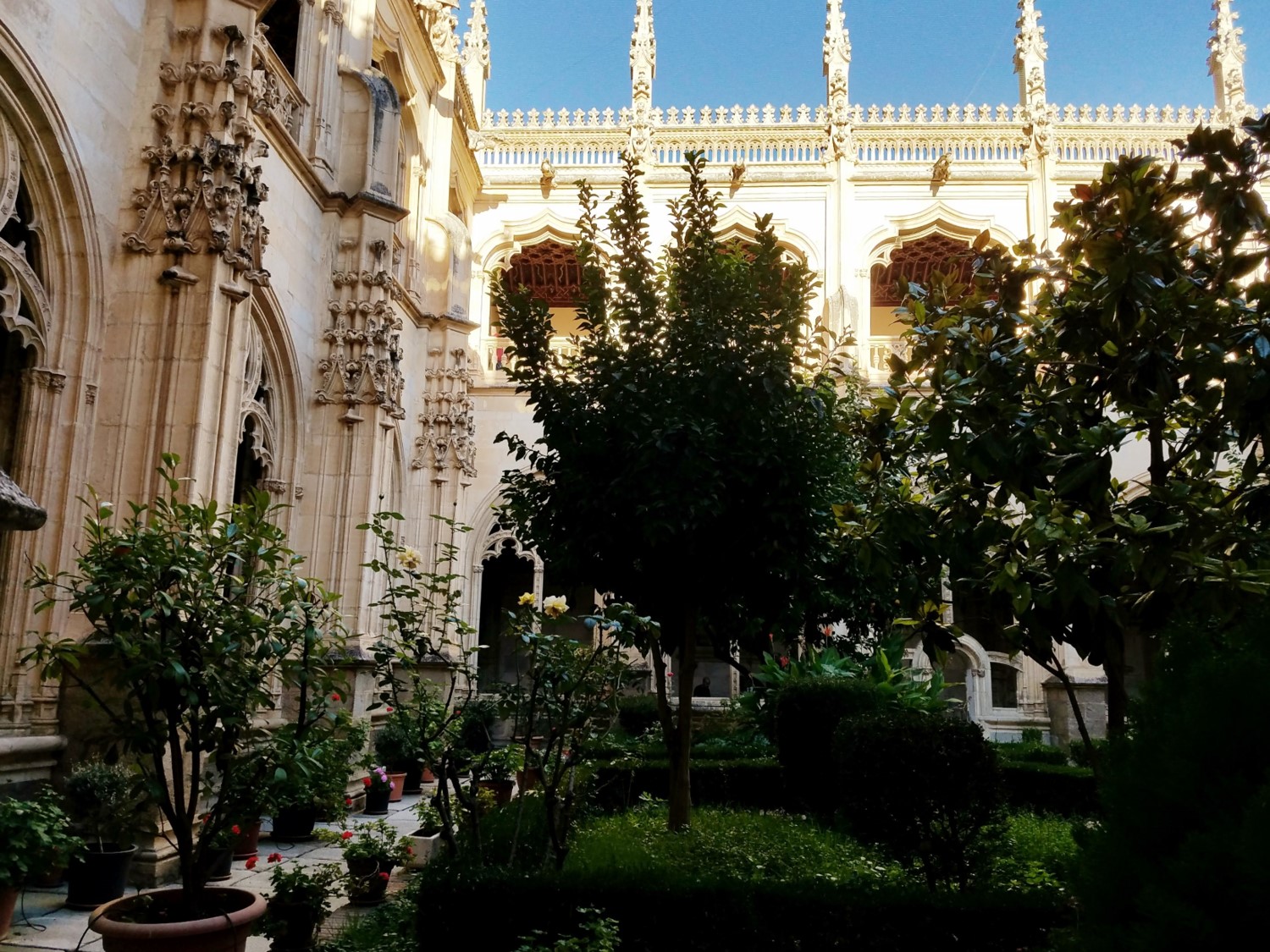
On the central windows that face the courtyard, we find eagles holding royal shields between yokes and beams of arrows. Cresting is used, that is, fretwork found in the upper part of a building or a roof.
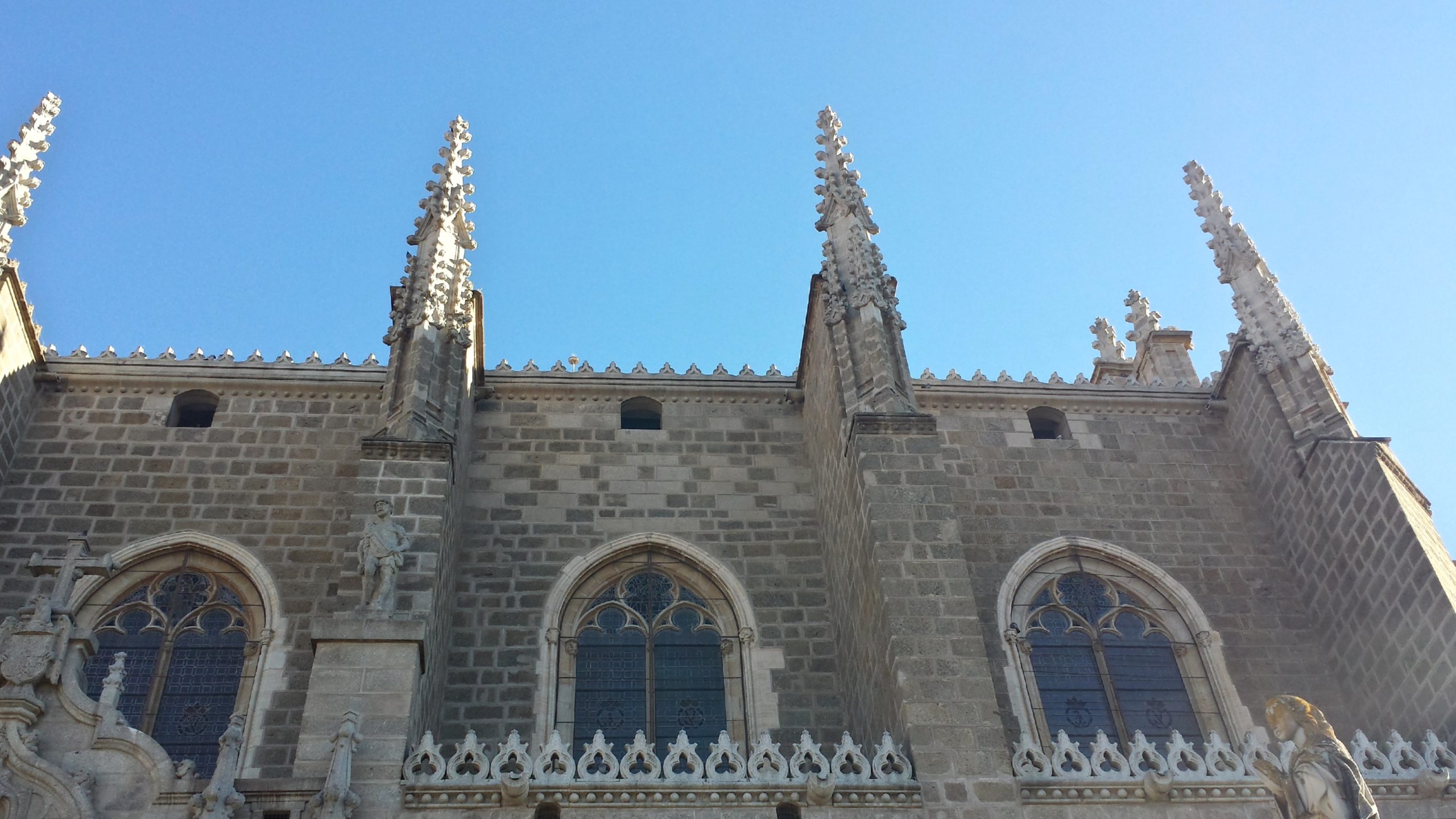
The fretwork borders the roof tiles and hides it with the use of pinnacles or needles which provide for greater height of the structure from the cloister.
The Monastery Church
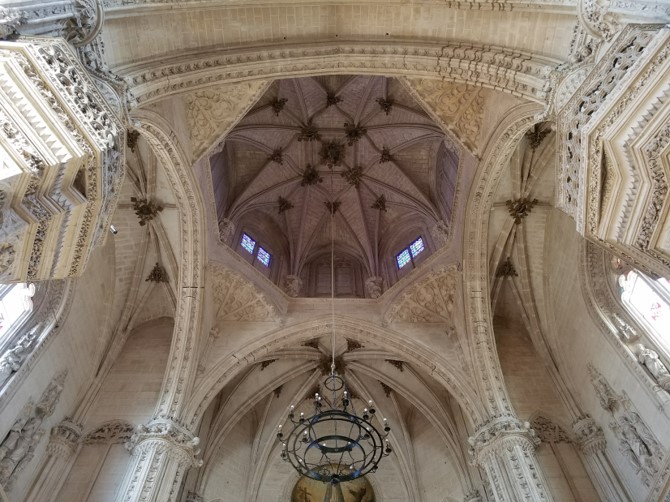
The church of the Monastery of «San Juan de los Reyes» in Toledo, has a single nave covered with ribbed vaults, starry dome over the presbytery, high choir and side chapels between the buttresses. The abundant decoration that adorns the cruise and the main chapel stands out. As for the altarpiece of the presbytery, the original one disappeared during the Napoleonic war.
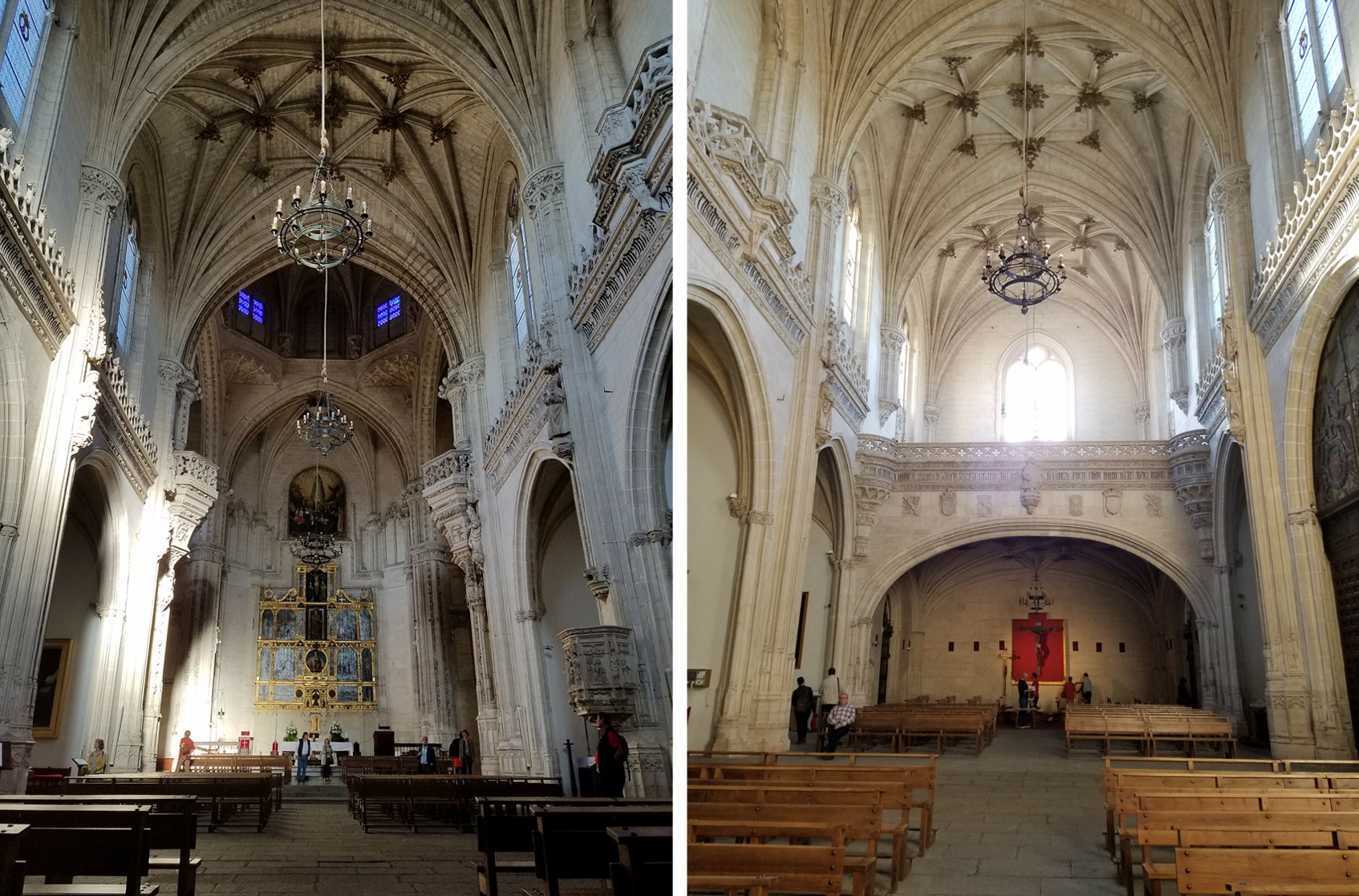
The current one from the last century comes from the «Santa Cruz» Hospital of Toledo, founded by Don Pedro González de Mendoza, Cardinal of the Holy Cross of Jerusalem. That is why the weapons of Cardinal Mendoza, founder of the Hospital, are showcased in the altarpiece. Its author is Francisco de Comontes, carver and painter. In the altarpiece one observe the scenes of: Jesus on the way to Calvary, The Descent and Santa Elena with the miracles of the Cross.
Mirador del Alcázar de Toledo
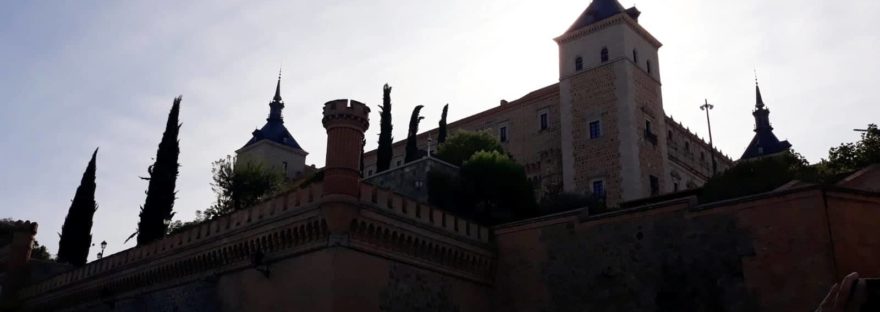
A los pies del Alcázar de Toledo y ante la mirada del Monumento a la Gesta del Alcázar, se encuentra de frente con el Rio Tajo, su Mirador. El Mirador del Alcázar se ubica sobre un estacionamiento privado soterrado. Seguir leyendo «Mirador del Alcázar de Toledo»
Lookout of the Alcazar of Toledo
At the feet of the «Alcazar» of Toledo and under the watchful eyes of the Monument to the «Gesta del Alcazar», facing the Tagus River, is Lookout Terrace of the Alcazar. The «Mirador del Alcázar» is located on the gounds of a private underground parking. Seguir leyendo «Lookout of the Alcazar of Toledo»
The «Plaza de Oriente» in Madrid
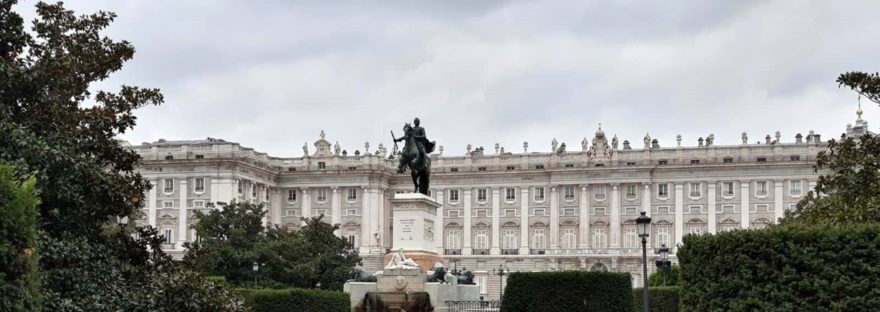
Delimited by the Royal Palace, the Royal Theater and the Monastery of the Incarnation we find the «Plaza de Oriente» in Madrid, Spain. It is worth noting that the «Plaza de Oriente» is much more than merely a place to cross to visit some other nearby monument. Seguir leyendo «The «Plaza de Oriente» in Madrid»